Search This Blog

Showing posts with label New Age Philosophy. Show all posts

14 October, 2012

Many Lives, Many Masters by Dr.Brian Weiss


Many Lives, Many Masters is the true life story that most people would find it hard to believe. Dr. Brian Weiss, M.D., psychiatrist by profession, graduating from Columbia University and Yale Medical School, spent years in the disciplined study of the human psychology, training his mind to think as a scientist and physician.


He held steadfastly to conservatism in his profession, distrusting anything that could not be proved by traditional scientific method.


In this book he recounts his experience with a patient, Catherine in 1980, who came to his office seeking help for her anxiety, panic attacks and phobias. When traditional methods of therapy failed, he tried hypnosis on her. During these sessions she recalled her past life experiences and even the time in-between her lives. Her recollections were so vivid and revealed information she could not have known at all, that he was convinced that they were definitely from the past lives. For the first time, Dr Brian Weiss came face-to-face with the concept of reincarnation and the many tenets of Hinduism, which as he says in the last chapter of the book, "I thought only Hindus...practised."

 
For 18 months, Dr. Weiss used conventional methods of treatment to help his patient Catherine overcome her traumas. When nothing seemed to work, he tried hypnosis, which, he explains, "is an excellent tool to help a patient remember long-forgotten incidents. There is nothing mysterious about it. It is just a state of focused concentration. Under the instruction of a trained hypnotist, the patient's body relaxes, causing the memory to sharpen... eliciting memories of long-forgotten traumas that were disrupting their lives."

 
Dr. Weiss started researching on this phenomenon to get a better understanding of what was happening to Catherine. He studied the works of Dr. Ian Stevenson, another psychiatrist from Virginia University, who had collected over 2000 experiences of children who had memories of their past life. Some even exhibited ability to speak languages that they were not exposed to (xenoglossy). He also found references of reincarnation in the old and the new testament. The Roman emperor Constantine deleted these references because he felt that this concept would weaken the growing power of the church by giving humans too much time for salvation.

 
During the initial sessions, the doctor regressed Catherine back to her early childhood and she strained and stretched her mind bringing out isolated, deeply-repressed memory fragments. She remembered from age five when she swallowed water and felt gagged when pushed from a diving board into a pool; and at age three when her father reeking of alcohol molested her one night. But what came next, catapulted skeptics like Dr. Weiss into believing in parapsychology, and in what Shakespeare had said in Hamlet (Act I Scene 5), "There are more things in heaven and earth... than are dreamt of in your philosophy."

 
In a series of trance-like states, Catherine recalled "past life" memories that proved to be the causative factors of her recurring nightmares and anxiety attack symptoms. She remembers, "living 86 times in physical state" in different places on this earth both as male and female. She recalled vividly the details of each birth - her name, her family, physical appearance, the landscape, and how she was killed by stabbing, by drowning, or illness. And in each lifetime she experiences myriad events "making progress... to fulfill all of the agreements and all of the Karmic (from Hindu concept of Karma) debts that are owed.

 
Dr. Weiss's skepticism was eroded, however, when she began to channel messages from "the space between lives", messages from the many Masters (highly evolved souls not presently in body) that also contained remarkable revelations about his father and his dead son. Catherine was able to provide information about them which no one else could possibly know. She revealed the Hebrew name of his father, the heart condition due to which his new born son died and the reason why Dr.Brian chose psychiatry. She also said that his son was born and to repay his parent’s debts. Often Dr. Weiss had heard his patients talk about near-death experiences when they float out of their mortal bodies guided towards a bright white light before reentering their discarded body once again.

 
But Catherine revealed much more. As she floats out of her body after each death, she says, "I am aware of a bright light. It's wonderful; you get energy from this light." Then, while waiting to be reborn in the in-between-lives states, she learns from the Masters great wisdom and become conduit for transcendental knowledge.


More than her recollections of her past lives, what I found amazing was her messages from time in-between lives. She heard messages from whom she termed ‘masters’ and they provide some profound philosophical insights. “Our task is to learn, to become god-like through knowledge. By knowledge we can approach god”. This sounded so much like Vedantic statement, “knowledge alone can lead to god-hood”


These experiences made Catherine increasing psychic. She was able to remember her past life recollections; however, she was not able to remember the in-between states. What was remarkable about Catherine’s knowledge according to Dr. Brian, which defied all other explanations, was that it was not only detailed and specific but beyond her conscious capacity. Within three and a half months of her first hypnosis session, her symptoms virtually disappeared. Here is another very Hinduism-like message from the masters “We have debts that must be paid. If we have not paid out these debts then we must take them to another life…”

 
Dr. Brian Weiss talks about this in the preface to the book, “It took me four years to garner the courage to take the professional risk of revealing this unorthodox information. Suddenly, one night, I felt the need to put this down on paper…. I knew that no possible consequence I might face could prove to be as devastating as not sharing this knowledge… I thought of my old Hungarian grandfather who died when I was a teenager. Whenever I would tell him I am afraid to take a risk, he would lovingly encourage me by repeating his favorite English expression: Vat the hell”.

--------------------------------------------------------------------------
Source: Excerpts from the book on "Many Lives, Many Masters" by Dr Brian Weiss
----------------------------------------------------------------------------

19 September, 2012

Opening your Heart to a Higher Self


       The experience of oneness-of feeling united with your concept of a higher force or with God is a common theme of most of the world's religions and many secular philosophies. In Judaism, for example, the Shemay, or central prayer, is translated from Hebrew to mean "The Lord is One." In Christianity, Jesus said, "I and my Father are One." Native Americans refer to the "Great Spirit." In Hinduism and Buddhism, the essence of God is to be found within "Tat Tvam Asi," which is Sanskrit for "Thou art That," or, "you are one with God." Atheists and agnostics can simply call it as peace.

We are not Separate from God


       In all of these religions, God is described as being omnipresent, omniscient, and omnipotent that is God is everywhere, all knowing and all-powerful. If God is everywhere, and if there is only one God, then we are not separate from God.

       What is it that keeps us from realizing this? Various religions and philosophies describe in different terms, but the essence is that our minds create separation and isolation between ourselves and others as well as between ourselves and God. Stated more accurately, our minds keep us from seeing that everyone and everything is simply God manifesting in different ways.

       This is not just philosophy or mysticism, for God or a higher force can be experienced. By quieting down and removing the disturbances in our mind, we can experience the underlying unity of all creation. And when we do, then we can fully enjoy the richness and diversity of life in all its manifestations.

       Most religions and cultural traditions describe people who have had a direct experience of a higher force or God. Abraham, the patriarch of both Christianity and Judaism as well as some of the non-Western traditions, is said to have experienced God differently. So did Moses, Jesus, Buddha, Mohammed, and many others. These people are described as having realized God or enlightenment. that is, they did not get peace from the outside themselves, they realized that they already had it when they simply stopped disturbing it. They did not become one with a higher force; they realized that they already were. They had a direct experience that, in the final analysis, we only appear to be isolated.

       They realized that the higher force or God without is the same as the higher force or God within. So can we.

       Even modern physics is developing a remarkably similar view of the universe. Quantum physics is beginning to help us understand that underneath the diversity--the various names and forms--is an essential unity.

       Physics and metaphysics (and some physicians) are beginning to find a common ground. the language of physicists and the language to mystics begin to sound very similar. In trying to describe the experiences of oneness--"being, not becoming," "a timeless moment," everything and nothing"--the words sound full of paradox, even meaningless, as people try to describe something that is beyond the limitation of words.

       Einstein's famous equation--energy equals mass times the speed of light squared, or E=MC 2 -- demonstrated that energy and matter are inter-convertible. In other words, everything in the world is a manifestation of different forms of energy. the forms change, but the underlying essence does not.

       There is an intelligence of super consciousness behind this energy, as Einstein also recognized, "I shall never belief that God plays dice with the world," he once said, echoing the French philosopher Anatole France who wrote in 1894, "Chance is perhaps the pseudonym of God when He did not want to sign."

       Classical physics echoed the view of the world that philosopher Rene Descartes outlined in the seventeenth century. Descartes saw the mind as separate from both nature and one's own body. In his view, the body is simply a machine that functions according to mechanical laws--a view of medicine still shared by many doctors. Because of this way of looking at the world, most of modern medical research is focused on drugs or surgery to affect bodily processes, to the neglect of our mind and spirit.

       On one level, of course, we are limited by time and space; we are separate from each other. You are you, and I am me. Moreover, we can celebrate our differences. Though we are separate from each other, we are not only separate. On another level, there is higher force working through each of us, whatever name we give to that, and that force connects us all. We feel isolated only because we believe we are separate and only separate.

       By analogy, the light from a movie projector appears on the screen is different characters, situations and dramas. However, behind this diversity is the same light, which equally illuminates the hero and the villain, the powerful and the weak, the lover and the beloved.

       We first need well-defined personal boundaries and a strong sense of autonomy before we can transcend them. When we can maintain a "double vision"--enjoying the diversity and richness of life while remaining grounded on a higher force then we can begin to free themselves of self-destructive patterns. Then we can go out into the world without being so caught up by it; without being so knocked around by it; without being destroyed by it. We can enjoy the drama without forgetting who we are.

       In 1896, a spiritual teacher named Swami Vivekananda gave a series of lectures in London on these ideas:

In one word, this ideal is that you are divine, "Thou art That...." To many this is, no doubt, a terrible ideal, and most of us think that this ideal can never be reached, but it can be realized by everyone. One may be either man or woman or child; one may belong to any race--nothing will stand as a bar to the realization of this ideal, because it is realized already, it is already there. All the powers in the universe are already ours. It is we who have put our hands before our eyes and cry that it is dark. Know that there is no darkness around you. Take your hands away there is the light which was from the beginning.

       This experience of oneness, of an expanded Self, has implications on both a cellular level and on a global level. In this context, "Love your neighbors as yourself" is a description of truth, not simply a command. All religions, all forms of worship, all types of prayer and meditation are equally valid--there are many paths to the same ultimate truth. Our higher Self is limited only by our capacity to experience it.

       When we realize that, everything is our Self in different forms, in that moment we experience that there is nothing to fear, including death. When Ramana Maharishi developed cancer (even saints and sages can get cancer and heart disease), he was surrounded by his students who pleaded, Please do not die, please do not leave us." And he replied, "Where would I go?"

       More recently, a cardiologist conducted an interesting research study giving more evidence of our interconnectedness and prayer's influences.  Dr. Randy Byrd conducted a double-blind randomized study of 393 patients at San Francisco General Hospital who were admitted to the coronary care unit during a ten-month period.  He arranged for people to pray for 192 of the patients but not for the 201 others.  These two groups were comparable in terms of age and disease severity.

       Dr. Byrd recruited people from around the country to pray for each of the 192 patients.  He asked each person to pray everyday in whatever form he or she wished.  Each patient in the experimental group received daily prayers from five to seven people, although these patients were unaware of this.

       He found that the prayed-for patients suffered fewer complications in three areas.  First, only three required antibiotics, compared to sixteen in the control group.  Second, only six had pulmonary edema (fluid in the lungs), compared to eighteen in the control group.  Finally, none of the prayed-for patients required intubation (artificial respiration), while twelve of the others did.  While this study is small (and twenty-three other disease measures showed no response to prayer), it suggest that we may be more interconnected than we often realize.

      In summary, then, your mind, body and spirit are all intimately interconnected.  Because of this, coronary heart disease occurs on emotional and spiritual levels as well as physical ones.  The Opening Your Heart program is designed to address all of these levels, not just the physical ones.

       If we limit our treatment only to the physical heart, then the disease tends to come back again and again--or the treatments may be worse than the illness.  If we also address the emotional and spiritual dimensions, then the physical heart often begins to heal as well.

       You can use the techniques in this book (the author's book, Dr Dean Ornish's Program for Reversing Heart Disease) to open your heart in emotional and spiritual ways that can help  transform your life for the better.  Although we have the technology to evaluate the physical improvements that result from this program, medical science has not yet found a way to objectively measure the emotional and spiritual healing that can occur on this program.  But you can experience it for yourself.  

-------------------------------------------------------------------------------
Source: Dr Dean Ornish, from Dr Dean Ornish's Programme for Reversing Heart Diseases.
-------------------------------------------------------------------------------
18 December, 2011

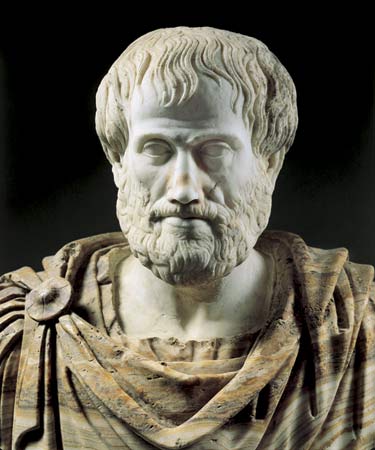
Aristotle's Search for Truth


       The question arises, as to what human intelligence can tell us about God.  Therein lies the whole thrust of philosophy and, more specifically, metaphysics.

       Aristotle wants truth.  He wants to establish a science of truth.  Make no mistake; metaphysics is in some respects a very difficult science.  We should not take lightly or oversimplify the means by which Aristotle comes to an intellectual knowledge of God.  It is not an easy process of deduction.  We need a level of intelligence that goes beyond the mere establishment of facts or an investigation of the how.  Metaphysics seeks to go beyond any notions of such-and-such a thing or such-and-such group of things, to grasp the very being of things.  That is why Aristotle says that object of metaphysical study is being in virtue of its own nature and not in its capacity as such-and-such a thing.

       To be convinced of the rigor of Aristotelian thought, we have only to read the Metaphysics, his analysis of substance, actuality, and potency, of the "one" and the "many," of motion, and of the definition of words in Book 5.  Aristotle seeks to penetrate the being of visible things and their movement, from their generation to their decay.  He hopes to come to know the light residing in them, their intelligibility, their capacity to be grasped by human intelligence.  And so he looks at their being, their existence.  But he also recognizes that visible things do not possess their existence; they are things in a state of motion, of "becoming."  From the way they come to be and yet do not have fullness of being in themselves, Aristotle deduces that beyond them there must necessarily be a being that simply is, eternal.  Aristotelian contemplation is the penetrating gaze of reason that sees - not with the eyes, but with the intelligence, a presence, the God.

       How does the metaphysician see God?  On the basis of the reality of movement and becoming, Aristotle seeks the origin of becoming, for all movement implies not only an efficient cause, a mover, but above all, a reason for the existence of the movement, a good that gives rise to the movement, which is the final cause.

      There is therefore also something which moves it [the First Heaven, which is the source of movement in the universe] and since that which is moved and moves is intermediate, there is something which moves without being moved, being eternal, substance, and actuality.  And the object of desire and the object of thought move in this way; they move without being moved.  (Metaphysics 1072a21).

       Aristotle also notes, 'If it were not true, the world would have proceeded out of night and 'all things together' (universal confusion) and out of night and 'all things together' (universal confusion) and out of non-being" (Metaphysics 1072a19-20), a possibility that he considers absurd.  It would be a negation of the intelligence.

       The first mover, then, exists of necessity; and in so far as it exists by necessity, its mode of being is good, and it is in this sense the first principle.... On such a principle, then, depend the heavens and the world of nature.  (Metaphysics 1072b10-14).

       In some very dense texts (Metaphysics 1072b-12-21), Aristotle tries to grasp what this life of God and in God is.  God is the sovereign thought that thinks on itself, for in God "the intelligence and the intelligible are the same."  And Aristotle adds that God always has the immense joy of contemplation - the joy that we possess only for a few fleeting moments.

       We say therefore that God is a living being, eternal most [the supreme] good, so that life and duration continuous and eternal belong to God; for this is God.  (Metaphysics 1072b26-30).

       Finally, Aristotle asks himself in what way the universe contains the good, the sovereign good:

       ... whether as something separate and by itself, or as the order of the parts.  Probably in both ways, as an army does; for its good is found both in its order and in its leader, and more in the latter; for he does not depend on the order but it depends on him.  And all things are ordered together somehow, but not all alike - both fishes and fowls and plants; and the world is not such that one thing has nothing to do with another, but they are connected.  For all are ordered together to one end. (Metaphysics 1075all-18).

       Obviously, the wise the philosopher becomes, the more this capacity to philosophize and contemplate takes root in him, the more this activity of looking at God, in and through visible things and their movement, becomes a source of joy.  It becomes the happiest, most blessed, most joyous activity and the source of  immense - I dare even say ecstatic  - pleasure.  This activity is not then intellectual investigation, a laborious labor, but leisure.  It is as if the intelligence has finally attained its principal object.  It rests in this object.  Of course the word "leisure" does not mean here what we commonly use it to mean, the opposite of serious activity.  It is the perfection of intellectual activity, which pauses and marvels in the greatest and finest of its objects:  God.  Thus the wise man extricates himself from the law of becoming and movement, from that of stress and political activity, to attain the eternal: the prime, unmoved mover.  Through contemplation, he takes his place, for a brief moment, outside of time.

Source: Excerpts from the Book on Made for Happiness, Discovering the Meaning of Life with Aristotle by Jean Vanier.

------------------------------------------------------------------------------------------------------
ABOUT THE AUTHOR JEAN VANIER
Jean Vanier is the son of a former Governor General of Canada, George Vanier.  Vanier wrote his doctoral thesis on Aristotle and taught philosophy at the University of Toronto.  In 1997, he received the Paul VI Prize for his work on behalf of human development and progress.  Jean Vanier lives in France. 
-------------------------------------------------------------------------------------------------------

17 December, 2011

Listening to Your Inner Voice


       Over a century ago, Ralph Waldo Emerson stated,        The key to tapping the inner voice lies in becoming quiet, stilling the mind, and allowing intuition to bubble up into your awareness.
"There is guidance for each of us, and by lowly listening we shall hear the right words." 

       You can achieve this stillness through any process that relaxes you and slows down your thoughts - meditation, visualization, long walks, exercise, driving on a country road, and so on.  In the midst of this silence, your intuition will speak to you in any number of ways -- through words, a bodily, a gut feeling, a picture, or just a general sense about things.  Be open to the way that is right for you.  Trust your own response.  In time and with practice, it will become clearer and easier to recognize.

       Like all great spiritual truths, the idea of listening to yourself is simply in theory, but difficult in practice.  This is because the higher voice is not only voice seeking your attention.  We have inside us a false voice, also known as the voice of the ego.  While the inner voice gives expression to who we really are, the false voice focuses on who we think we should be.  The inner voice supports our essential nature; the false voice denies it.

       Each of these voices is accompanied by a number of clear signs.  By recognizing these signs, we can learn to discern between the two. 

       The primary experience that emerges from listening to your inner voice is the presence of inner peace.  This is the "peace of God, which passeth all understanding," an inner tranquility that emerges from a place deep in the soul.  From this refuge, you can literally rise above any turmoil or chaos that surrounds you in the outer world.

       The second sign that accompanies the inner voice is that of joy.  The path of the spirit and the path of the heart are one and the same.  When you go through life with an open heart, you are truly blessed.  This is why mythologist Joseph Campbel advised his students, "Follow your bliss."

       Following the inner voice also bring abundant energy and vitality.  Have you ever wondered why certain people seem so enthusiastic and alive?  Aligning ourselves with our Higher Power allows the life force to flow through us more easily.

       Finally, you will be supported by invisible hands.  There is no doubt about this.  When you follow your heart's desire, life will support you.  When you do your share, God will do His.  When you reach out for what you want, the universe will reach back and meet you half way.  Take a moment to review your life or the lives of your friends.  You will find examples of how the universe assists us when we are being faithful to the calling of the inner voice.

Signs of the False Voice

       Just as the universe provides clues when we follow the inner voice, it also lets us know when we follow the false voice.  Following the false voice brings anxiety instead of peace, burden instead of joy, judgement instead of love, confusion instead of clarity, blocks instead of flow.

       One of the key ways to recognize the voice of the ego is through the presence of fear.  Going against family tradition, David dropped out of law school to pursue his passion for music.  Initially, he felt a surge of joy and excitement as his authentic self came to the surface.  Then suddenly a series of doubt flooded his awareness - "What if I fail?"  "How will I get the money?" "What will people say"  This was the voice of FEAR speaking - fear of failure, fear of poverty, and fear of criticism.

       Or perhaps you have just had an argument with your mate. You go within and still small voice says, "Take the first step towards reconciliation."  You feel a deep peace about this when suddenly the false voice pipes in, "It's too risky.  What if I am rejected?  I'm going to wait for the other person to reach out first."

       Moreover, while the inner voice is committed to the truth, the false voice preaches dishonesty.  Let's say that a bank has mistakenly credited you with a large sum of money.  The ego says. "I don't have to report the error.  They don't need the income as much as I do.  I think I will keep my mouth shut."  These fearful words express a belief in scarcity - for me to have more, others must have less.  The voice of love, on the other hand, lives in a consciousness of abundance.  It says, "I gladly share what I have, for I know that there is enough to provide for all."

       These voices can be further discerned by paying attention to the sensations in your body.  For example, you might be trying to decide between two job opportunities.  Become quiet and visualize each situation in your mind's eye.  Pretend that you have begun working in each location, and then focus on your body's cues.

       In seeing yourself in the first job, you may notice a heaviness or depression in the chest, rapid breathing, churning  in the stomach, or some other sensation of discomfort.  The presence of these sensations is telling you that something is amiss.

       In contemplating the second job, you may experience a warm sensation in the chest or stomach, a lightness in the heart, a feeling of enthusiasm, or a peace and tranquility.  This is your spirit's way of telling you that the second job is better choice.

       Try experimenting with these cues until you find the ones that work for you.  Over time, you will become skilled at discerning between the two voices and will choose the inner voice as the one to guide you.

Getting Off Track and How to Get Back On

       What happens when we choose to follow the false voice?  Consider the story of an elementary school teacher named Joan.  At the  beginning of the school year, she was offered a new teaching position.  Although she was happy in her current classroom, the new job offered more money, responsibility, and prestige.  "May be I should take it," she thought.

      Immediately after accepting the position, Joan had a dream in which she was just barely holding onto the top ledge of a thirty-five-story skyscraper.  As the week unfolded, her anxiety increased until she decided to become still, go inside, and ask for guidance.  The inner voice responded loudly and clearly, telling her that she was not ready for the new job and needed to remain in her present position.

       The next day, Joan nervously called her principal, fearing that she would be reprimanded for reneging on her contract.  But her guidance did not let her down.  The principal was understanding and said she would hire a different teacher.  As Joan hung up he phone, a week's worth of tension dissolved from her body; she experienced a deep inner peace.  Spirit was speaking.

       This story illustrates a number of important principles.  First, by listening to the voice of "should", Joan succumbed to the false voice.  In almost all instances, the "should" voice represents a parental or societal message about obligation and duty.  The inner voice, on the other hand, pursues a path for its own sake, for its own joy.

       Second, Joan was able to turn her situation around because she used her pain as feedback to obtain a greater understanding of her situation.  If she had denied or repressed her distress, it would have returned at a later point, perhaps as a physical illness.  Ignoring the pain only creates more pain and leaves the original problem unsolved.

       Third, Joan did not make the "wrong" decision.  When we view every action as increasing our self-knowledge, there are no failures, only learning experiences.  No matter what choice we make, we can grow through it if we remain open to the teaching that is presented.

Keys to Supporting the Inner Voice

       At each moment in time, we are asked to make a choice - a choice between following he inner voice of truth or false voice of separation.  Here are some qualities that will help you to remain faithful to the highest that is within you:

1.  Courage - the ability to feel yours fears and move forward inspite of them.

2.  Patience - the capacity to wait for your good and give yourself praise and acknowledgement, even when it is not coming from the world.

3Commitment - the willingness to do whatever it takes to pursue your vision, including the making of necessary sacrifices.

4.  Faith - the willingness to trust in an invisible means of support.  At times you may be called to leave a known situation (a job, home, relationship, and so on) for the unknown.  Your guidance may go against logic and reason.  this is when you need the faith to trust in the process.

       But here is the paradox.  Those things we think of as secure exit in the world of form and are therefore subject to change.  On the other hand, the one thing we think of as insubstantial, the world of spirit, is really the only secure place we have to stand.  It is your connection to your spiritual nature, to your Higher Power, to God-in-you, that constitutes your real security, your ultimate grounding.

       To summarize, in listening to your inner voice, you -

       1.  First ask for inner guidance.

       2.  Then, get quiet and listen.

       3.  Finally, act upon what you hear.

       Step out in faith, and give life the opportunity to support you.  If you keep your focus on that benevolent Higher Power, not only will you be guided, but also your life will unfold more beautifully than you ever could have imagined.  The universe will open doors for you that you did not even know existed!  When Joseph Campbel left a prestigious university to pursue his passion for mythology, he had no idea that nearly sixty years later he would be sharing that passion with millions of people on television.  But he trusted his intuition, took it a day at a time, and his life unfolded in perfect Divine Order.  The same can be true for you when you listen to and follow your inner voice.

Source: Excerpts from the book on Listening to your Inner Voice: Discover the Truth Within You and Let It Guide Your Way by Douglas Bloch.

-------------------------------------------------------------------------------------------------------
About the Author Douglas Bloch:

Douglas Bloch, M.A., is an author, teacher and counselor who writes and speaks on the topics of psychology, healing and spirituality.  "Listening to Your Inner Voice" grew out of quest to have his life directed by the Higher Power within.  He is also the author of many inspirational books.  A former radio talks show host and popular public speaker, Douglas has given hundreds of lectures and workshops to businesses, schools, church groups, recovery centers and national psychology conferences.  He has also appeared on radio and television shows across the country.  Douglas makes his home in Portland, Oregon, with his partner Joan.
--------------------------------------------------------------------------------------------------------

12 November, 2011

Past is past


       Think of a notebook with several pages.  Each page in itself is just an open page.  It is up to us to either scribble on it or write poetry on it.  Irrespective of whether we scribble on it or pen poetry on it, we can still turn to the next page and again have the choice of either scribbling on it or writing poetry on it.  Till the notebook ends, the freedom of choice to use or abuse the pages of the notebook purely rests with us.  More importantly, even if we have wasted the first half of the notebook with just scribbling, we can still write enough poetries in the second half of the notebook and make it worth preserving.  Metaphorically, the notebook can be compared to our life and each open page in it to a day in our life.  The dawn of every day offers us the choice of using or abusing the day.  Till we embrace death, the freedom of choice to use or abuse the today's of our life purely rests with us.  Whatever be our age, as a worst case scenario, even if we have wasted the entire past of our life, we can still make a beginning, starting today.  We can make the most of every day of our life from now on and create a life that will be cherished.

       So, focus your energy in building your future than in processing the bygone past.  The rear-view mirror of an automobile can aid in driving, but you have to look ahead through the windshield, for that's the only way to reach your destination.  Your past only serve as a rear-view, mirror, reflecting your accomplishments and your failures.  It teaches you the lessons on what to do and what not to do.  You must mature out of your past and take the future awaiting you, head on.  With derived maturity from your past, you must and you can do much more with your future.

       Two monks were walking when they spotted a teenage girl standing near the stream they were about to cross.  The young girl had fear written all over her face.  It was already dusk and daylight was fading.  In response to the question one of the monks had asked, the girl replied, "I am afraid of crossing the stream."  The monk volunteered and carried the girl on his shoulders and dropped her at the other bank.  The two monks continued to walk.  After they had walked for about 30 minutes, noting a sense of unease in the other monk, the monk who had helped the young girl asked him if something was bothering him.  The other monk retorted, "Don't you know what monks aren't supposed to touch the opposite sex?  When then did you carry the girl on your shoulder?  That's why I am upset."  Centred and still smiling, the monk who had helped the girl replied,"Oh, the girl you are talking about... I dropped her long time back.  Why are you still carrying her in your head?"

       Your past has left you a long time back; so, what is the point in you continuing to carry it in your head.  You can help a person caught in the jaws of a crocodile.  But how do you help a person who thinks he is caught in the jaws of a crocodile, while all he has is just the picture of crocodile under his feet?  Your past has no other reality except in your memory.  Nothing is a greater retardant to growth than the burden of the emotions of the past.  The trouble with the emotions of the past is that it leaves you with scratched spectacles.  Through your scratched spectacles, everything you see appears to be scratched.  You become incapable of seeing life as it is; you only see it through the experiences of your past.  Someone misbehaved with you in the past and because of those scratched spectacles every new acquaintance too appears to be a rogue.  An employee of yours learnt everything from you and then became your competitor.  Now, every new employee is viewed with suspicion.  You tend to burden your present with your past.

       You need new spectacles to view your today and build your tomorrow.  Treat your past not as a source of hurt and agony, but as an experience that you needed to gain this maturity.  You needed those experiences  to become the person you are.  But for that yesterday, you won't be what you are today. 

       The process of chiselling may not have been pleasant, but without it you won't be the sculpture you are today.  Use your today to construct your future, and not to dissect your past.  At the point of maturity, it is crucial where you are looking.  If you focus on your past, you will only feel negative and low.  If you can focus on your future, you will feel positive and charged up.  Bitter yesterdays have the potential to create better tomorrows.  When bad things happen to good people, they become better people.  This is the blueprint on which life is built.

       Yesterday was over yesterday.  Draw a line to your past and move on.  Today is a new day.  Today is a new beginning.  Don't make your future an imposition of your past.  Your past is just a picture of a crocodile...it doesn't really exist.  Wake up from the psychological slumber of your past.  Don't waste another drop of tears on your past.  The beginning is from where you begin.  Begin today.  Begin now.  The person you will become in life is waiting for you in the future.  You must go and meet him.  So, focus your energies in being an architect of your future.

       The past of an exquisite sculpture was a stone, which took numerous blows from the chisel of a sculptor.  The past of a flute in the hands of maestro was a bamboo that was seasoned in fire and with holes drilled into it with hot iron rods.  A glittering diamond was once an unnoticed piece of carbon.  You can go through anything in life, if you can become what you can become in life.  There is nothing in a caterpillar that suggests that it can be a butterfly; yet, it becomes a butterfly.  Your past is not equivalent to your future.  What you have been, and what you are, are inconsequential to what you can be.  Crucify your past and resurrect into a new future.

Follow the following:

1.     Liberate yourself from the baggage of hurt from the past by embracing forgiveness.  Between the hated and the hater, it is always the hater who suffers more.  So, one of the most sensible things you can do is to forgive the other and thus liberate yourself from the clutches of hatred.  Unless you Forgive, you cannot Forget.  Give pardon and get peace.  A little pain in one part of the body should not stop the functioning of the entire body.  Something that had gone wrong during a certain phase of your life shouldn't halt the progress of your life.  Imagine yourself holding a chair in the air.  In spite of the fact that the weight of the chair remains the same, the longer you lift the chair, the heavier the chair will become.  Carrying is an effort.  Dropping is a decision.  You have been labouring with your past.  Make a decision and drop it.

2.     You can either stand on 'Reality' and blissfully progress towards your 'Desires' or you can imagine your 'Desires' and look at your 'Reality' and thus feel miserable and stagnant.  I can accept my present reality that "My English isn't good" and keep progressing by taking the steps needed towards my desire of wanting to be good in English, or I can keep regretting, "I want my English to be good but the disturbing fact is, my English is very bad."  I can accept my present reality that "My marriage isn't in great shape" and keep progressing by taking the steps needed towards my desire of wanting to enjoy a great marriage, or I can remain miserable and stagnant by regretting, "I wanted to have a great marriage but it is in pathetic shape."  The by-product of a progress is bliss and the by-product of stagnation is misery.  So, stand on your today and blissfully progress towards your tomorrow, than to stand on your today and regret your yesterdays.

3.     Even in the case of those who have had a glorious past, you still have the responsibility to build a glorious future.  Yesterday's success does bit deserve today's applause.  That you were the champion last year doesn't give you an inch of an advantage this year.  Neither the starting line is pushed nor the finishing line is altered.  To win again, you have to begin again.  In this race, this performance alone counts.  There is no 'Carry forward' in the race of life.  Satisfaction is the enemy of performance.  Don't let your good yesterdays to impede the possibilities of a better tomorrow.  So, after every significant success, reset your axis, make it a starting point again, and go for it another time.  It is not about 'From where to where?'  It is about 'From here, where?'

       The caterpillar was gone.  The butterfly emerged.  The seed was gone.  The sapling emerged.  The stone was gone.  The sculpture emerged.  Mohandas Gandhi was gone.  Mahatma Gandhi emerged.  Siddhartha was gone.  Buddha emerged.  Let go of your past, and discover a new you within you in the future.

Source: Excerpt from the magazine "FT"

19 June, 2011

Assume Responsibility


There was this wise old man who had answers to all life-related questions. He was an enlightened person. A boy, in his adolescent years, wanted to test the wise old man. So, he caught hold of a little bird. Holding it in the palm of his hands and his hands hidden inside his coat, he asked the wise old man, “I have a bird with me. Is it alive or dead?” The old man smiled and said, “If I tell you the bird is alive, you will crush the bird and show me a dead one. If I tell you the bird is dead, you will release the bird and show me it’s alive.”

Embarrassed, the boy dropped his head and began to walk away. He would have hardly walked a few steps. He heard the voice of the old man, “Mind you my son, in fact, this is the philosophy of life – your life and your death are in your hands.”

In spite of the canvas, despite the paints and the brushes involved, the quality is the responsibility of a painter. Similarly, the quality of a sculpture is the responsibility of a sculptor. If so, then the quality of your life is your responsibility and yours alone. Your life and your death are in your own hands. No blame is allowed. By blaming, you give up the power to change. By taking responsibility you gain the power to change and thus you take charge of your life. The first step to adulthood is to assume complete responsibility for your life. Epictetus profoundly put it: “God has entrusted me with myself.”

This happened in one of the fastest growing companies, which prided on innovative ways to motivate their employees. One day, when the employees turned up for work, they saw a poster on the entry gate with the words, “Yesterday the person who has been hindering your growth in this company passed away. We invite you to join the funeral in the room that has been prepared in the gym.” Though in the beginning there was a spell of gloom as they read the notification, gently their curiosity got the better of them. “Who was that man who hindered the growth of his colleagues and the company itself?”

One by one when they got closer to the coffin, and when they looked inside, they became speechless. They stood near the coffin, shocked in silence, as if someone had touched the deepest part of their soul. There was a mirror inside the coffin; everyone who looked inside it could see himself. On the mirror was another poster that read, “There is only one person who is capable of stopping you permanently, and it is YOU. And, there is only one person who is capable of revolutionizing your life, and that’s again YOU. Your life does not change when your boss changes, when your friends change, when your partner changes, when your company changes. Your life changes when YOU change. No one can take responsibility for your life, like YOU can.”

Man not only has the power to take responsibility for his own life, but has within him the capacity to take responsibility for the life of others too. Wherever opportunities present themselves, be the first one to put your hand up. Followers accept responsibilities. Leaders assume responsibilities. You take the initiative. You volunteer. You step forward. Announce your presence. Be counted, and make yourself count.

When you assume responsibility, always take it unconditionally. What is not unconditional will never be done. There is no point in keeping the ‘exit’ door open all the time. Burn the bridges. Conditions are required only to pass on the blame, in case, there is a failure. Don’t even consider failure as an option. Where conditions succeed, responsibilities fail. Where responsibilities succeed, conditions are redundant. Just take it and do it.

The Lord may have borne the cross of your sins, but even He will not bear the cross of your growth. The cross of your growth is your responsibility, and yours alone. You alone must carry it. Only when you feel responsible for your life, you can respond with ability. Else it will be responding with disability. Put your hands up and be counted. There is no better way for a man to create himself than to assume responsibilities.

Of all the creations, man alone, by the way he lives his life, can make this world a little better than it was when he was born. Every man has the capacity to be an architect of a new world. Even if a concept of rebirth exists, you will not be born again as you – not in this form and this name. This is the only chance you have got to be you. Don’t miss yourself and let the world not miss you. Make the most of this birth, this lifetime. Bring forth every human faculty and live a complete human life.

Responsibility is in ensuring you never let a moment pass by you, without you making your presence felt. Add value to every moment. Add value to every relationship. Transform every transaction by adding value to it. Let nothing pass by you without you adding value to it. Be an alchemist. Let everything transform in your presence. In turn, you will be transformed. In helping others to find themselves, you will find yourself. Be a reformer. Be the change agent.

Every revolution in the world happened when one man assumed responsibility of gigantic proportions. In Martin Luther King, Nelson Mandela, Mahatma Gandhi, Raja Ram Mohan Roy, Ambedkar and Mother Teresa a social revolution was triggered, when they could no more be a passive witness to the predicament of the then society. They waited for no one to lead them. They needed no body to ask them to take the responsibility. They took the lead. They took the initiative. They assumed the responsibility. They put their hand up. They decided to make their life count. They decided to reform the prevailing social conscience and thus caused a re-formed society.

“Something must be done,” that’s the attitude of a spectator in life. Talks about everything; does nothing. A classic follower! If somebody does something, I am willing to enjoy the benefit of it. I, from my side, will not seat, won’t toil, and forget about the blood or tears.

“I will do something about it,” is what leaders are made off. They volunteer to bear the cross. Their life is never a ‘Came and Went’ statistical life. Their life is a legacy of ‘Came and made it Count’.

In Veda Vyas, Adi Sankara, Budha, Mahavira, Jesus, Mohammad, Guru Nanak…. Came the embodied souls, who took it upon themselves to provide a spiritual path to the then ‘lost our ways’ humanity. The Latin word religare, from which ‘religion’ is derived, simply means, ‘to bind back’. Thus, the purpose of religion in the truest sense of the word is to bind us back to the original source from which we came. Each one of these messiahs assumed the responsibility to lead us back to the source from which we came, and through them new paths were born, new religious paths unfolded.

Whether it is your own individual transformation, or the re-formation of humanity at large – it all begins with one embodied human soul stepping forward to assume that responsibility

A promotion in your career isn’t a new status but it is a new responsibility. Man and woman becoming husband and wife isn’t a new status but a new responsibility. Husband and wife becoming father and mother isn’t a new status but a new responsibility. Being born a a human being, in itself, isn’t a status but a responsibility, for you can impact this world in ways you alone can.

If I ask you to carry a 12 Kg single granite stone and walk a kilometer, you will struggle with it. Now, I ask you to carry your child who is 14 Kg for the same one kilometer and you will happily do it. Anything in life that is perceived as Kashtam Kashtam (difficult, difficult) will only appear to be even more difficult. Do the same thing, perceiving it as Ishtam Ishtam , the most complex of tasks can be done with effortless ease. Stop viewing responsibilities as a burden and start seeing them as opportunities. Stop saying Kashtam Kashtam (difficult, difficult) to responsibilities and step forward to take responsibilities by saying Ishtam Ishtam.

Source: FT May 2011 issue.


12 May, 2011

Failure is not an end, Never give up.


Soichiro Honda

In 1938, when Soichiro Honda took his first working sample of piston ring to Toyota, they rejected stating the samples were not upto their standards. Rather than focusing on the failure, he continued to work on his goal. After two years of redesigning, he finally won a contract with Toyota. He built a factory to commence production, which was bombed and destroyed due to World War. He rebuilt a new factory which was brought down into rubbles by earthquake. Honda was not a man who would accept failure as a possibility. Recession and depression caused by the war had created extreme gasoline shortage in Japan. So people resorted to walking and cycling. Honda designed a tiny engine and attached it to his bicycle. His neighbours too wanted one of those motorized cycles from him. He was unable to meet the demand. So he built a plant and manufactured his motorcycle ‘The Super Cub’ which earned him the Emperor’s award. Today, Honda Corporation employs over 100,000 people. Why Honda never considered failure as the end.

Swamy Chinmayananda

Great people became great people because of the way they dealt with failures and setbacks in life. At every fall they refused to remain fallen. They refused to quit. They refused to give up. They refused to accept a ‘No’ from life. “Their greatest glory,” in the words of Swamy Chinmayananda, “was not in never falling, but in rising every time they fell.”


The newspaper editor fired him because he had no good ideas. A pastor employed him to draw canvassing material for the church. He was allowed to stay in the backward of a mouse-infested church garage. One of those mice inspired the man so much that Mickey Mouse was born, and Walt Disney was revealed to the world. Walt Disney epitomized what Churchill preached, “Never, never, never, never, never, never give up.”


Chester Carlson’s 

Chester Carlson’s idea was rejected by over 20 corporations and after seven long years of rejections that idea unfolded to the world as Xerox Corporation.

Colonel Harland D Sanders 

Colonel Harland D Sanders heard 1009 ‘No’s to his proposal of a good chicken recipe before he heard the first ‘Yes’, and the multimillion-dollar KFC corporation was born.

Sylvestor Stallone

The Rambo we know, Sylvestor Stallone was rejected by over 1000 Holywood agents before he had his first breakthrough. One of the greatest inventors of all times who went on to receive 1,093 patents, more than anyone in the history of the world, is Thomas Alva Edison. Even he had to fail 9,999 times before he perfected the light bulb.  Einstein’s parents thought he was mentally retarded.

Thomas Alva Edison

Steven Spielberg

 Steven Spielberg was placed in special class for learning disabled. 

Sir Isaac Newton

Isaac Newton did poorly in grade school.

Beethoven

Beethoven’s music teacher told him, ‘you are hopeless’.

Michael Jordan

Michael Jordan was dropped from his high school basketball team. Winston Churchill failed in his 6th grade. Edison’s teacher told him he was too stupid to learn anything.

Abraham Lincon

Abraham Lincoln failed in business at the age of 21 and again at 24. He was defeated in a legislative race at the age of 22, and twice in the congress race at the age of 34 and again at the age of 36. He then lost a senatorial race at the age of 45 and again at the age of 49. He failed to become the vice-president at the age of 47. Yet, after all these failures, Abraham Lincoln went on to become the historic President of United States at the age of 52. Lincoln showed to all of us that if one wants rainbow in life, you got to be willing to put up with the rain.

Failure is a parenthesis inside which success hides. There is no sunrise without sunset. There is no life without death. There cannot be only-success and no-failures. Champions understand that it is better to face outstanding failures than mediocre success. Only those who are willing to persist inspire of temporary setbacks, only those who would not succumb to defeats, only those who persisted in spite of midway failures went on to write success stories.

Nothing wrong ever turned to be right in the long run. The very fact that so many failures have finally turned into success implies that failures are not wrong. Learn from your failures and move on. Edison said, “Many of life’s failures are people who did not realise how close they were to success when they gave up.” Just don’t give up. Keep on keeping on.

-------------------------------------------------------------------------------
To sum up briefly, failures are not an end itself. Never, never, never give-up. Learn from your failures and move on. Keep on keeping on.
-------------------------------------------------------------------------------