
As an Avatara
Let me tell you about an Acharya, an Avatara of the Lord, who is worshipped by many Hindus as a God. He is Lord Dattatreya, who is regarded as a Divine Incarnation of the Holy Trinity, Brahma, Shiva and Vishnu. The word Datta in Sanskrit means 'given'; and 'Atreya' signifies the lineage of the great Sage Atri. Dattatreya was 'given' to sage Atri and his wife, Anasuya, as a gift of the Gods. Dattatreya is also regarded as the Aadi Guru in the Nath tradition of worship.
There are many versions of the legend of Dattatreya, and each one of them is deeply symbolic and significant. I shall narrate to you the version of his story as it is told to us in the Markandeya Purana.

Birth
Sage Atri and his wife Anasuya were a pious and a devoted couple; Anasuya was an ideal rishi patni, who was a tremendous source of support to her husband in his spiritual practices. A fe rishis who had met the couple, happened to speak very highly of her faith and devotion to her husband. Indeed, they praised her to the skies.
This came to the notice of Goddesses Lakshmi, Parvati and Saraswati. When they heard of Anasuya and her great qualities as a pativratta, they begged their husbands - Vishnu, Shiva and Brahma - to put Anasuya to the test, so that they may see how devoted she was.
The Holy Trinity of the Gods assumed the role of mendicant sanyasis and went to Atri's ashram, there, they begged for food with the traditional words: Bhavati bikshaam dehi. As you know, India's ancient scriptures tell us that it is our duty to feed those who come to our door. Athiti devo bhava; the guest is the equivalent of God. And when they happen to be ascetics who are obliged to live on food that is begged as biksha, it is incumbent upon the lady of the house to offer them food, even if t happens to be last morsel in the house! Accordingly, the pious and devout Anasuya came out immediately, to ffer them food. But, the three mendicants laid an impossible condition before her: they would not accept food at her hands, unless she served them without any clothes on her person - in other words, completely naked.
This might sound shocking to us in the modern age!. But in those days of Tretayuga, people were made of sterner stuff, and would analyse the reasons behind such strange requests. So did Anasuya. Being the perfect grahasti, she knew it was her sacred duty to feed the mendicants, who had begged food from her, in this sense, they would be like her children, and she, who offered them food, would be in their mother's position. But the strange condition they had laid, revealed that they were no ordinary mendicants. Above all, so true and faithful was her devotion to her husband, that Anasuya was certain that no harm or shame would ever come to her. She decided to accept the strange condition and offer food to the visitors.
She meditated on the form of her husband, took refuge at his feet, and sprinkled over the three Sanyasins, a few drops of water which were used for washing the feet of her husband. The moment Anasuya did this, the Gods who wee standing before her, turned into tiny infants, mewling and crying at her doorstep. Overjoyed at this Divine Miracle, Anasuya picked the infants up and feed them with her own milk. When the babes were fed, she put them to sleep. Upon her husband's return, she narrated the story to him, and he was delighted and proud to hear of her noble conduct. The couple decided that they would keep the 'divine children' with them - and such was the Sage's taposhakti, that the Holy Trinity stayed in his ashram as three tiny, helpless infants.
However, alarm bells began to ring for their wives, who quickly descended to the earth to explain the leela to Anasuya. They freely acknowledged that she was indeed, a true pativrata and begged her to return their consorts to them. Instantly, sage Atri turned the infants into their original form - and Vishnu, Shiva and Brahma blessed the holy couple and granted them a boon of their choice.
Anasuya prayed that she should be blessed with a son, who would be the very incarnation of the Holy Trinity - and by this Divine Boon was born Dattatreya.
When Dattatreya attained manhood, he was gentle, peaceful and amiable. As he had the grace of the Tri-Murtis, and as he was a great Jnani, all rishis and ascetics worshipped him.
When the Adinath Sampradaya regards Dattatreya as the Lord of yoga and the first Guru, He is worshipped by millions of Hindus as a benevolent God.
Dattatreya is usually depicted with three heads, symbolising Brahma, Vishnu and Shiva - as well as past, present and future; and the three states of consciousness, waking, dreaming and dreamless sleep. He portrayed sitting in meditation beneath an adumbara (wish-fulfilling) tree. Infront of him are four dogs representing the Vedas.
According to the Brahma Purana, Datttreya performed taspasya on the banks of the River Gautami, and was blessed by Shiva to become Brahma Gnani. Thus, he is worshipped as Adi Siddha.
Dattatreya is one of the oldest deities, and mention is made of him in the Mahabharata and Ramayana. Several different sects and traditions have accepted him as an avatar and he continues to be worshipped widely in Maharastra, Gujarat, Karnataka and Andhra Pradesh.
In the Srimad Bhagawatam, we have another fascinating reference to Lord Dattatreya, narrated by Sri Krishna to his friend Uddhava. Dattatreya, speaking to King Yadu, a great ancestor and forefather of Sri Krishna, had revealed that he had learnt invaluable lessons and precepts from each of his twenty-four Gurus - the different aspects of creation.
It is said that King Yadu was wonderstruck by Dattatreya's spiritual radiance and the perfect contentment and peace in which he seemed to live, and begged him to reveal the secret of his happiness, as well as the name of the Guru who had imparted the same to him.
To this, the illustrious avatara purusha replied, "The Self alone is my Guru. Yet, I have learned wisdom from twenty-four other sources. Therefore, I regard them too, as my Gurus." He then mentioned the names of his twenty-four Gurus, and spoke of the wisdom they had bestowed on him.
They were:
Earth, water, air, sky, fire, the sun, the moon, a pigeon, a python, the ocean, a moth, a honeybee, an elephant, a honey-gatherer, a deer, a fish, a dancing girl, an osprey, a child, an arrow-maker, a maiden, a serpent, a spider and a wasp.

The Earth taught him the qualities of patience, forbearance and doing good to others. From the moment we get up from sleep, we stand upon the earth, we stamp upon it, we tread upon it, we jump and walk upon it. The earth puts up with it all - it puts up with billions upon billions of people like us and continues to support us.
The trees that grow upon the earth share this quality with their earth mother. They provide shelter and fruits to everyone - even to those who throw stones at them.
The true seeker learns to cultivate endurance, compassion and selflessness from the earth.

The Air taught him detachment. It carries to so many smells and vapours with it - good and bad - but it remains unaffected by them all.
The seeker must realise that his Atman too, is like the air - good and bad karmas cannot affect its essential nature.

The sky taught him the nature of all-pervading Brahman which is all around us, everywhere - and yet not in contact with any object.
The seeker must learn that deep within himself is the unlimited, infinite space of pure awareness that is the Self.

The Water taught him the lesson of purity. Water quenches thirst; its quality if sweet, its feel is smooth; water also washes, cleanses and purifies.
The seeker should aspire to become like the water - cleansing, purifying and thirst-quenching in the service of others.

The Fire taught him about the quality of illumination and effulgence. Fire burns everything; it gives out light and removes darkness.
The seeker must be like the fire which destroys all evil, and continues to shed radiance. His self-knowledge should dispel the darkness of ignorance around him.


The Sun taught him the unity of all Being. Although thee is one Sun in the sky, its reflection is found in various forms in reservoirs, rivers and even in the smallest earthen pots.
The seeker learns from the sun that the jivatmas are but reflections of the one great Paramatma.


The Moon taught him that Reality is unchanging - while appearances are illusory. The moon seems to wax and wane in our sight, but it is ever he same. So too, the Self is perfect and changeless - while man rises or falls according to his actions in life.

A Pigeon taught him an unforgettable lesson on worldly attachments which often become entanglements for the soul.
The sage saw a family of pigeons living on a tree. One day, the father and mother had left their young ones behind and flown out to gather food. Finding the young ones alone, a hunter spread his net and caught the young birds. When the parents returned and saw their young ones ensnared, they were disconsolate. In profound grief, overwhelmed by her inability to save her children, the mother threw herself into the net. Seeing her, the father followed her example - and thus the whole family was trapped in misery. Perhaps, if the parent-birds had applied themselves to the problem, they could have found ways and means to save their little ones. But, as it happened, all of them perished at the hands of the hunter.
The seeker must learn that attachment is the root cause of all worldly bondage. Our worldly entanglements only lead to misery.

The Python taught him that God provides for all creatures, according to their needs. The python is a gigantic creature which cannot move about nimbly to gather its food; yet God, in His wisdom and mercy, sends food to this creature.
The aspirant must learn from the python the spirit of surrender and acceptance, in the complete faith that God will deal with us according to our karmic needs.

The Ocean taught him the quality of tranquility, of being unmoved by all incidents and accidents of life. Just as the ocean remains in place even as hundreds of rivers and waterways pour into it, so the soul must rest within its own bounds, in its own sense of fullness.
The aspirants must learn profundity and depth from the ocean, that he may remain calm and still and deep, as the tides of change rise and flow all around him.

The Moth taught him two valuable lessons; when ma becomes dazzled by earthly enchantments, he will perish by his own desires even as the moth rushes into the flame, to be destroyed. A higher and more profound lesson is that when it seeks light, it enters the light and llows itself, its individuality to be merged with the light.
from the moth, the seeker must learn to keep away from self-destructive passions and desires wile aspiring to become One with God.

The Honeybee taught him that the nectar of life is gathered from different sources. Similarly, a sanyasi begs for a little food from each household that he may not become a burden on any one individual.
The seeker must learn that spiritual qualities can be imbibed from all sorts of experiences. He must learn to absorb and assimilate his experiences and gather the honey of the spiritual wisdom from all these sources.

The Elephant taught him to be wary of temptation and lust. Lured by the sight of the female elephant, the male elephant walks foolishly into the trap laid by men - falling into a pit cleverly covered with grass so as to make it trip and fall.
The aspirant must learn from this that he must practise self-control and avoid being lured by lust and passion.

The Honey-gatherer is a bird which is a kind of robber among the fauna and flora. After the industrious bees have worked hard to gather and store the honey in the hives, they relax, hoping to enjoy the fruit of their labour later. At this time, the honey-gatherer arrives and steals all the honey, leaving very little for the bees.
The lesson that the seeker must learn is not to hoard and preserve wealth for an unknown, unseen future - for that future may never be ours! It is better we utilise our wealth for the present benefit of us and others, instead of hoarding excessive wealth beyond our needs.

The Deer is often lured and trapped by hunters using a strange device - they plan upon drums creating a kind of music that enthralls the deer. It pursues the music, walking into the trap laid by the hunters.
For the aspirant, this 'enchanting' music repesents the fleeting, alluring sensory pleasures that the world has to offer. When we are lured by these pleasures, we have no time to spare for the higher, loftier aspects of our life. Therefore, we must resist the "call" of the senses.

The Fish taught Dattatreya a valuable lesson: its eyes ae always open: its swims about freely in the water; and yet, it allows itself to be 'hooked' miserably by, 'swallowing the bait' that is put out to catch it~ The bait is a pathetic worm - and the fish falls for the sake of this little worm, suffering horrible pain and then a miserable death.
The aspirant should learn that he should not 'rise to the bait' by yielding to every temptation that is presented, to him. More particularly, he should guard against greed for the wrong kinds of food.

A Dancing-girl named Pingala taught the hermit another valuable lesson. She depended for her livelihood on wealthy 'customers' who would pay her in return for her company. One day, she waited and waited for her rich clients - and not one of them appeared. At first she gave in to hopelessness - but out of this grew her sense of dispassion. She became determined to devote all her efforts and attention to God, rather than to her earthly patrons. The 'treasure' she would earn by this would be far more valuable than the material wealth her customers brought her.
The seeker too, must learn that worldly ambition is less worthwhile than higher aspirations. Instead of directing our desire towards people and treasures which come and go, we should direct it towards God - for in His Love is our salvation.

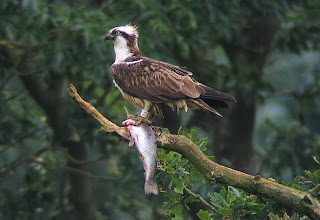
An Osprey taught Dattatreya to guard against the sense of greed and covetousness. This bird found a piece of meat and grabbed it in his beak. As he flew away with it, he was pursued by vultures and hawks and other birds of prey. Feeling threatened by their pursuit he dropped he piece of meat he was carrying and low and behold, the birds of prey quit following him and swooped down on the meat itself.
From this the seeker learn that the man who covets worldly wealth and pleasures must face enmity, hostility and unforeseen dangers. When he, 'lets go' of these, he attains peace and tranquility.

A Child, an infant, taught him the value of carefree existence and true happiness. When you scold him or speak harshly to him, the child cries; but he forgets your anger and harshness very soon and smiles at you happily. He does not labour any grudge or resentment; he holds no ill-will against anyone for long.
The aspirant must also cultivate this quality of child-like innocence and simplicity, which will enable him to be positive and cheerful at all times, with all people.

A Poor maiden was husking paddy, when visitors bringing a proposal of marriage for her, came to see her parents. They were seated in the outer room, while her chores kept her busy in the kitchen. She realised that the many bangles and bracelets she wore on her arm were jingling and making too much noise; embarrassed, sh removed a few of them - but the noise did not abate. One by one, she removed all of them until there was just one bangle on each writ. Now, she continued peacefully with her work.
The many 'bonds' and 'attachments' of this world only add to the stress and clamour of life. They breed dependence. Likewise, multiplicity of wants and constant company of crowd hampers us from self-realisation. Solitude, breaking away from crowds, will help us move towards our goal unhindered.


The Arrow-maker was a role-model of focus and concentration. His mind, his eyes and his hands were all directed towards his chosen task of forging arrows and directing them at their target. When the King passed by him in a long, royal procession, the arrow-maker did not even notice them; such was his concentration and focus.
The aspirant too, must learn to practise his sadhana with one-pointed mind, ekagrita. Our soul should be like the arrow which is direced at the target of Liberation - Moksha. We must not let our attention be distracted by the shouts and shows of this world.

A Serpent taught Dattatreya the lesson of non-possession and independence. A serpent does not make a home for itself; it dwells in holes dug by other animals. And a serpent lives on its own - not in groups or with other serpents.
An aspirant must also learn to do without possessions and attachment.


The Spider spins its web out of its own saliva, and sometimes, he himself gets entangled in it. We must guard against getting entangled in the web of our own desires. Also, the spider reminds us that this vast Universe is a web of illusion created by Brahman. The world is not material, not real; it is made up of the subtance of God.


The Wasp, in its life-cycle, passes from the egg, through the larva and pupa to its final form. It teaches us not to identify with the body - our physical form - and realise that we are the atman, the immortal soul, which is ever ready to fly towards God and Liberation~
These were the twenty-four Gurus of Dattatreya - and he himself acknowledged them as such.
May we be inspired by his illustrious example. Let us also have open minds; let us be free from prejudice and intolerance; let us learn from all; let us learn in every way we can!
~~~~~~~~~~~~~~~~~~~~~~~~~~~~~~~~~~~~~~~~~~~~~~~~~~
Source: Excerpts from teh book on "Short sketches of SAINTS Known & Unknown" written by Dada J.P. Vaswani.
~~~~~~~~~~~~~~~~~~~~~~~~~~~~~~~~~~~~~~~~~~~~~~~~~~
She meditated on the form of her husband, took refuge at his feet, and sprinkled over the three Sanyasins, a few drops of water which were used for washing the feet of her husband. The moment Anasuya did this, the Gods who wee standing before her, turned into tiny infants, mewling and crying at her doorstep. Overjoyed at this Divine Miracle, Anasuya picked the infants up and feed them with her own milk. When the babes were fed, she put them to sleep. Upon her husband's return, she narrated the story to him, and he was delighted and proud to hear of her noble conduct. The couple decided that they would keep the 'divine children' with them - and such was the Sage's taposhakti, that the Holy Trinity stayed in his ashram as three tiny, helpless infants.
However, alarm bells began to ring for their wives, who quickly descended to the earth to explain the leela to Anasuya. They freely acknowledged that she was indeed, a true pativrata and begged her to return their consorts to them. Instantly, sage Atri turned the infants into their original form - and Vishnu, Shiva and Brahma blessed the holy couple and granted them a boon of their choice.
Anasuya prayed that she should be blessed with a son, who would be the very incarnation of the Holy Trinity - and by this Divine Boon was born Dattatreya.
When Dattatreya attained manhood, he was gentle, peaceful and amiable. As he had the grace of the Tri-Murtis, and as he was a great Jnani, all rishis and ascetics worshipped him.
When the Adinath Sampradaya regards Dattatreya as the Lord of yoga and the first Guru, He is worshipped by millions of Hindus as a benevolent God.
Dattatreya is usually depicted with three heads, symbolising Brahma, Vishnu and Shiva - as well as past, present and future; and the three states of consciousness, waking, dreaming and dreamless sleep. He portrayed sitting in meditation beneath an adumbara (wish-fulfilling) tree. Infront of him are four dogs representing the Vedas.
According to the Brahma Purana, Datttreya performed taspasya on the banks of the River Gautami, and was blessed by Shiva to become Brahma Gnani. Thus, he is worshipped as Adi Siddha.
Dattatreya is one of the oldest deities, and mention is made of him in the Mahabharata and Ramayana. Several different sects and traditions have accepted him as an avatar and he continues to be worshipped widely in Maharastra, Gujarat, Karnataka and Andhra Pradesh.
Srimad Bhagawatam
In the Srimad Bhagawatam, we have another fascinating reference to Lord Dattatreya, narrated by Sri Krishna to his friend Uddhava. Dattatreya, speaking to King Yadu, a great ancestor and forefather of Sri Krishna, had revealed that he had learnt invaluable lessons and precepts from each of his twenty-four Gurus - the different aspects of creation.
It is said that King Yadu was wonderstruck by Dattatreya's spiritual radiance and the perfect contentment and peace in which he seemed to live, and begged him to reveal the secret of his happiness, as well as the name of the Guru who had imparted the same to him.
To this, the illustrious avatara purusha replied, "The Self alone is my Guru. Yet, I have learned wisdom from twenty-four other sources. Therefore, I regard them too, as my Gurus." He then mentioned the names of his twenty-four Gurus, and spoke of the wisdom they had bestowed on him.
Twenty-four great Teachers
Who were these fascinating group of twenty-four great teachers?
They were:
Earth, water, air, sky, fire, the sun, the moon, a pigeon, a python, the ocean, a moth, a honeybee, an elephant, a honey-gatherer, a deer, a fish, a dancing girl, an osprey, a child, an arrow-maker, a maiden, a serpent, a spider and a wasp.
What was the nature of the Wisdom that these Gurus imparted to Dattatreya?

1) EARTH
The Earth taught him the qualities of patience, forbearance and doing good to others. From the moment we get up from sleep, we stand upon the earth, we stamp upon it, we tread upon it, we jump and walk upon it. The earth puts up with it all - it puts up with billions upon billions of people like us and continues to support us.
The trees that grow upon the earth share this quality with their earth mother. They provide shelter and fruits to everyone - even to those who throw stones at them.
The true seeker learns to cultivate endurance, compassion and selflessness from the earth.

2) AIR
The Air taught him detachment. It carries to so many smells and vapours with it - good and bad - but it remains unaffected by them all.
The seeker must realise that his Atman too, is like the air - good and bad karmas cannot affect its essential nature.

3) SKY
The sky taught him the nature of all-pervading Brahman which is all around us, everywhere - and yet not in contact with any object.
The seeker must learn that deep within himself is the unlimited, infinite space of pure awareness that is the Self.

4) WATER
The Water taught him the lesson of purity. Water quenches thirst; its quality if sweet, its feel is smooth; water also washes, cleanses and purifies.
The seeker should aspire to become like the water - cleansing, purifying and thirst-quenching in the service of others.

5) FIRE
The Fire taught him about the quality of illumination and effulgence. Fire burns everything; it gives out light and removes darkness.
The seeker must be like the fire which destroys all evil, and continues to shed radiance. His self-knowledge should dispel the darkness of ignorance around him.


6) SUN
The Sun taught him the unity of all Being. Although thee is one Sun in the sky, its reflection is found in various forms in reservoirs, rivers and even in the smallest earthen pots.
The seeker learns from the sun that the jivatmas are but reflections of the one great Paramatma.


7) MOON
The Moon taught him that Reality is unchanging - while appearances are illusory. The moon seems to wax and wane in our sight, but it is ever he same. So too, the Self is perfect and changeless - while man rises or falls according to his actions in life.

8) PIGEON
A Pigeon taught him an unforgettable lesson on worldly attachments which often become entanglements for the soul.
The sage saw a family of pigeons living on a tree. One day, the father and mother had left their young ones behind and flown out to gather food. Finding the young ones alone, a hunter spread his net and caught the young birds. When the parents returned and saw their young ones ensnared, they were disconsolate. In profound grief, overwhelmed by her inability to save her children, the mother threw herself into the net. Seeing her, the father followed her example - and thus the whole family was trapped in misery. Perhaps, if the parent-birds had applied themselves to the problem, they could have found ways and means to save their little ones. But, as it happened, all of them perished at the hands of the hunter.
The seeker must learn that attachment is the root cause of all worldly bondage. Our worldly entanglements only lead to misery.

9) PYTHON
The Python taught him that God provides for all creatures, according to their needs. The python is a gigantic creature which cannot move about nimbly to gather its food; yet God, in His wisdom and mercy, sends food to this creature.
The aspirant must learn from the python the spirit of surrender and acceptance, in the complete faith that God will deal with us according to our karmic needs.

10) Ocean
The Ocean taught him the quality of tranquility, of being unmoved by all incidents and accidents of life. Just as the ocean remains in place even as hundreds of rivers and waterways pour into it, so the soul must rest within its own bounds, in its own sense of fullness.
The aspirants must learn profundity and depth from the ocean, that he may remain calm and still and deep, as the tides of change rise and flow all around him.

11) Moth
The Moth taught him two valuable lessons; when ma becomes dazzled by earthly enchantments, he will perish by his own desires even as the moth rushes into the flame, to be destroyed. A higher and more profound lesson is that when it seeks light, it enters the light and llows itself, its individuality to be merged with the light.
from the moth, the seeker must learn to keep away from self-destructive passions and desires wile aspiring to become One with God.

12) HONEYBEE
The Honeybee taught him that the nectar of life is gathered from different sources. Similarly, a sanyasi begs for a little food from each household that he may not become a burden on any one individual.
The seeker must learn that spiritual qualities can be imbibed from all sorts of experiences. He must learn to absorb and assimilate his experiences and gather the honey of the spiritual wisdom from all these sources.

13) ELEPHANT
The Elephant taught him to be wary of temptation and lust. Lured by the sight of the female elephant, the male elephant walks foolishly into the trap laid by men - falling into a pit cleverly covered with grass so as to make it trip and fall.
The aspirant must learn from this that he must practise self-control and avoid being lured by lust and passion.

14) HONEY-GATHERER
The Honey-gatherer is a bird which is a kind of robber among the fauna and flora. After the industrious bees have worked hard to gather and store the honey in the hives, they relax, hoping to enjoy the fruit of their labour later. At this time, the honey-gatherer arrives and steals all the honey, leaving very little for the bees.
The lesson that the seeker must learn is not to hoard and preserve wealth for an unknown, unseen future - for that future may never be ours! It is better we utilise our wealth for the present benefit of us and others, instead of hoarding excessive wealth beyond our needs.

15) DEER
The Deer is often lured and trapped by hunters using a strange device - they plan upon drums creating a kind of music that enthralls the deer. It pursues the music, walking into the trap laid by the hunters.
For the aspirant, this 'enchanting' music repesents the fleeting, alluring sensory pleasures that the world has to offer. When we are lured by these pleasures, we have no time to spare for the higher, loftier aspects of our life. Therefore, we must resist the "call" of the senses.
16) FISH
The Fish taught Dattatreya a valuable lesson: its eyes ae always open: its swims about freely in the water; and yet, it allows itself to be 'hooked' miserably by, 'swallowing the bait' that is put out to catch it~ The bait is a pathetic worm - and the fish falls for the sake of this little worm, suffering horrible pain and then a miserable death.
The aspirant should learn that he should not 'rise to the bait' by yielding to every temptation that is presented, to him. More particularly, he should guard against greed for the wrong kinds of food.
17) DANCING-GIRL
A Dancing-girl named Pingala taught the hermit another valuable lesson. She depended for her livelihood on wealthy 'customers' who would pay her in return for her company. One day, she waited and waited for her rich clients - and not one of them appeared. At first she gave in to hopelessness - but out of this grew her sense of dispassion. She became determined to devote all her efforts and attention to God, rather than to her earthly patrons. The 'treasure' she would earn by this would be far more valuable than the material wealth her customers brought her.
The seeker too, must learn that worldly ambition is less worthwhile than higher aspirations. Instead of directing our desire towards people and treasures which come and go, we should direct it towards God - for in His Love is our salvation.


18) OSPREY
An Osprey taught Dattatreya to guard against the sense of greed and covetousness. This bird found a piece of meat and grabbed it in his beak. As he flew away with it, he was pursued by vultures and hawks and other birds of prey. Feeling threatened by their pursuit he dropped he piece of meat he was carrying and low and behold, the birds of prey quit following him and swooped down on the meat itself.
From this the seeker learn that the man who covets worldly wealth and pleasures must face enmity, hostility and unforeseen dangers. When he, 'lets go' of these, he attains peace and tranquility.

19) CHILD
A Child, an infant, taught him the value of carefree existence and true happiness. When you scold him or speak harshly to him, the child cries; but he forgets your anger and harshness very soon and smiles at you happily. He does not labour any grudge or resentment; he holds no ill-will against anyone for long.
The aspirant must also cultivate this quality of child-like innocence and simplicity, which will enable him to be positive and cheerful at all times, with all people.

20) POOR MAIDEN
A Poor maiden was husking paddy, when visitors bringing a proposal of marriage for her, came to see her parents. They were seated in the outer room, while her chores kept her busy in the kitchen. She realised that the many bangles and bracelets she wore on her arm were jingling and making too much noise; embarrassed, sh removed a few of them - but the noise did not abate. One by one, she removed all of them until there was just one bangle on each writ. Now, she continued peacefully with her work.
The many 'bonds' and 'attachments' of this world only add to the stress and clamour of life. They breed dependence. Likewise, multiplicity of wants and constant company of crowd hampers us from self-realisation. Solitude, breaking away from crowds, will help us move towards our goal unhindered.


21) ARROW-MAKER
The Arrow-maker was a role-model of focus and concentration. His mind, his eyes and his hands were all directed towards his chosen task of forging arrows and directing them at their target. When the King passed by him in a long, royal procession, the arrow-maker did not even notice them; such was his concentration and focus.
The aspirant too, must learn to practise his sadhana with one-pointed mind, ekagrita. Our soul should be like the arrow which is direced at the target of Liberation - Moksha. We must not let our attention be distracted by the shouts and shows of this world.

22) SERPENT
A Serpent taught Dattatreya the lesson of non-possession and independence. A serpent does not make a home for itself; it dwells in holes dug by other animals. And a serpent lives on its own - not in groups or with other serpents.
An aspirant must also learn to do without possessions and attachment.


23) SPIDER
The Spider spins its web out of its own saliva, and sometimes, he himself gets entangled in it. We must guard against getting entangled in the web of our own desires. Also, the spider reminds us that this vast Universe is a web of illusion created by Brahman. The world is not material, not real; it is made up of the subtance of God.

24) WASP
The Wasp, in its life-cycle, passes from the egg, through the larva and pupa to its final form. It teaches us not to identify with the body - our physical form - and realise that we are the atman, the immortal soul, which is ever ready to fly towards God and Liberation~
Conclusion
These were the twenty-four Gurus of Dattatreya - and he himself acknowledged them as such.
May we be inspired by his illustrious example. Let us also have open minds; let us be free from prejudice and intolerance; let us learn from all; let us learn in every way we can!
~~~~~~~~~~~~~~~~~~~~~~~~~~~~~~~~~~~~~~~~~~~~~~~~~~
Source: Excerpts from teh book on "Short sketches of SAINTS Known & Unknown" written by Dada J.P. Vaswani.
~~~~~~~~~~~~~~~~~~~~~~~~~~~~~~~~~~~~~~~~~~~~~~~~~~


