Search This Blog

25 December, 2010

THEORY OF REINCARNATION


What happens when a person dies? 


His gross body perishes in that form. The material of the body merges with earth. Science declares that something cannot pass into nothing. The law of indestructibility of matter, the law of conservation of energy states it. The same law would apply to the subtle body as well. The subtle body of the person comprises his thought, feeling and desire. The resultant of his mental and intellectual forces. His inner energy comprising subtle matter. Applying the same law to the subtle body, you would realise that its energy cannot vanish into nothing at the time of death. In this world there are innumerable death occurring everyday. And innumerable births. The mental energies of those persons cannot disappear to appear all of a sudden. That would be against the established law of science.

Life is a series of experiences


Life of a series of experiences. The progression of life is determined by desires. Desires drive you from one experience to another. In philosophic terms an experience is dead and another born at every moment. Thus your desires drive you through a continuous procession of birth and death. This procession will continue in perpetuity until the desires are eradicated from your personality. Desires are the cause and the experiences of life are the effect. At the moment of death a person is left with innumerable, unfulfilled desires. He may vanish from your sight but that does not mean that his desires are extinct. The desires have to be eradicated to prevent further manifestation. The cause has to be removed to erase the effect. When the desires are completely exhausted the cycle of birth and death ends. That is the state of Self-realisation, God-realisation.

Thus numerous desires of different sorts remain unfulfilled when people die. At the time of their death these desires have not been exhausted. It would be irrational to presume that all of them disappear into nothing. Now, look at the world from another angle. Different types of people are born with distinct tendencies, inclinations, desires. Every human being enters the world with his pattern of thought, feeling, desire. And people are born with a variety of desires. These variegated desires could not have emerged from nowhere. To accept that they have come out of nothing would again be as irrational as to presume that they disappear suddenly. Such presumptions would be violating the code of science.

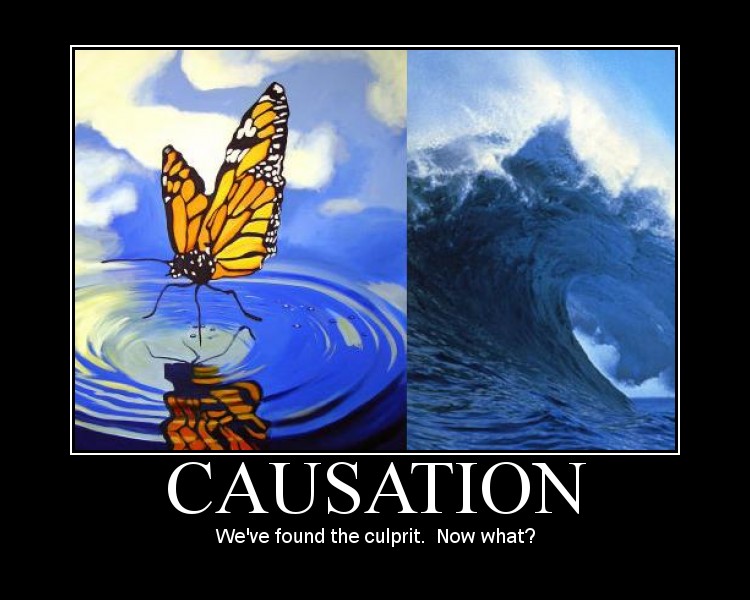
Hence the great thinkers of the past made a careful scrutiny of this world and found hordes and hordes of desires disappearing and appearing perennially. After a thorough investigation of this phenomenon they brilliantly connected the unaccounted gain of desires of the born to the unaccounted loss of desires of the dead. A sheer audit of the accounts of life. They applied the law of causation which governs the entire universe at all times. Took the desires of the born as the effect. This observation is in accordance with the law of indestructibility of matter, the law of causation, the law of karma. This ingenious correlation of cause and effect projects the theory of reincarnation. It is only a scientific deduction from the available data. But cannot be proved experimentally. Hence presented as a theory.

Child determines Parent


Another popular belief is that the newborn inherits the tendencies of its parents. That the law of heredity establishes it. The law of karma does not oppose the concept of heredity. It corrects the general misconception that the equation between the parent and child emanates from the parent. It is not the parents that determine the nature of the child. It is vice versa. The child determines the parents. The law of karma explains how the resultant effect of one’s mental and intellectual energies would find the right body, parents and environment. With no extraneous power deciding this choice.

If desires are the cause for the continuity of life, how can one take birth in an environment or circumstance not to his liking? Take a form of life different from his desire? Why would a person be born poor when he desires to be rich? Why would anyone desire to be born physically handicapped? If desires decide your life’s pattern how is it not so in actual fact? The world that you experience does not seem to always relate to your desires. This apparent paradox arises when you do not correlate cause and effect properly, fully. Your desires no doubt decide the course of your life. But then it is not a particular desire that decides. It is the compound of all your desires. The total effect of your desires decides the course. It is called the resultant desire.

The parallelogram law of forces in physics explains this phenomenon as illustrated below in figures 1 and 2. Consider an object in position O free to move in all directions. Two equal forces act upon it. One force horizontally along OA. The other vertically along OB. The object will then move, neither in the direction of OA nor OB, but diagonally along OR. There is no force operating along OR. Yet the object moves in that direction. The force that drives the object along OR is called the resultant. The resultant force is the effect of both the forces.

Let more forces OF1, OF2, OF3, etc. be applied on the object. Several forces of varying strength and direction. Then the resultant would be the total effect of all those forces. Let it be OR’. Then the object will move along OR’. Here again the resultant force may not be in the direction of any one of the forces acting upon it. Yet the object will move in that direction. The same phenomenon takes place in your life. Your life is ordered by your resultant desire. The total effect of all your desires. Innumerable desires operate in you. Each has its own strength and direction. But you will move in the direction of your resultant desire. Which may not be in the direction of any one of your desires. That should explain why your life may not always be in line with any particular desire. That is the law of life which applies to every individual throughout the world.

Besides the above analysis and conclusion, it would be interesting to observe what exactly happens to a person at death. To his gross, subtle and causal bodies and Atman, the Self within. It is obvious that the physical body has not gone. It lies there. And the Atman, of course, cannot go anywhere since It is all-pervading. It exists everywhere. Being so. It should exist in the dead body as well. Besides, movement of an object is possible from a place where it exists to a place where it is not. As the Atman pervades everywhere there is no place where It does not exist. Hence It cannot move. Thus, the physical body of the person and the Atman are very much there at the time of death. It is only the other two components of the individual viz., the causal and the subtle bodies that move out. Therefore, the transference of the causal and subtle bodies from one gross body to another is designated as the death of the former body and the birth of the latter.

Example of the sun and its reflections


The concept of birth and death becomes clearer with the example of the sun and its reflections. The sun’s rays are all-pervading. Wherever there is a reflecting medium there will be a reflection of the sun. Hold a mirror in a frame in broad sunlight. You will find a reflected sun in it. Remove the mirror from the frame and fix it in another frame. Instantly, the reflected sun in the first frame vanishes and appears in the second. The image is dead in the first and born in the second. The reflected sun moves from the one to the other. Brought about by the transference of the mirror.

Equate the example to the phenomenon of birth and death. The sun above represents the Atman. Its all-pervading rays would then be the pure Consciousness everywhere. The frame would be the gross body. The glass and the reflecting material composing the mirror would represent the subtle and causal bodies respectively. The Atman functioning through these bodies projects the individual. Thus, the transference of the subtle and causal bodies from one gross body to another determines the death and birth of the individual. The vasanas, desires are eradicated the individuality is dissolved. His cycle of birth and death ends. He attains spiritual Enlightenment.

Without the cognition of the law of causation and a clear understanding of the consequent theory of reincarnation, you could run into trouble. Here is a true story. A lady in her advanced age developed cataract in her eyes. She was losing her eyesight. At that time of her life a misfortune befell her. Her only daughter expired. She was terribly upset. She lost all her interest in the world. She would not meet anybody or go anywhere. Meanwhile her cataract ripened. She was practically blind. Her family and well-wishers appealed to her to undergo surgery. She refused to do so. She chose to deny herself eyesight for the rest of her life. She would say, “Am I to restore my eyesight to gaze at emptiness? The beauty in my home is gone. I have nothing more to see.” They were all confused. And did not know how to persuade her to go through the surgery. They approached a swami, a sage for help. The swami met her personally. The wise man explained to her how the resultant desire works. “Remember, you are entertaining a powerful desire not to see the world.” the sage said to her. “You are old. Death may overtake you any day. If you continue to deny yourself eyesight, there is a fair chance you will be born blind.” The lady sprang to her feet. And went through the surgery the same day.

The significant part of the episode is that a person could be born blind even though he does not desire it. The resultant of all his desires becomes the cause leading to that effect. Therefore, it would be in your interest to scrutinise at all times the type of desires you entertain. Avoid negative thoughts and desires. Try to turn them positive. If you practice that, you would not be a victim of self-inflicted complications in life. Your life would then become more meaningful, purposeful.

Imagine a person who is brutal, bloodthirsty. He develops a passion for destroying, killing. He becomes a dangerous killer. The society does not allow him manifest his destructive nature. The law prohibits it as well. His desires are frustrated. The frustrated desires must find their way out. This is not possible in his present embodiment, environment. Hence his resultant desire will forge itself into an appropriate embodiment for fulfilment. Thus his own desires could possibly cast his next incarnation as a tiger or a lion. Wherein the embodiment and environment becomes befitting, conducive for fulfilling those desires. No doubt, a human being cannot easily fall into an animal incarnation. A human possesses fine emotions and subtle thoughts which animals lack. Those thoughts and desires in him would strongly influence the resultant desire towards human incarnation. Notwithstanding it all, he could still force himself into a lower species by persistently indulging in such destructive passion.

There is also conjecture in spiritual lobbies that a person may not be reincarnated immediately after death. That his casual-subtle body may take a while before it finds the appropriate gross body and environment. The interim period after death and before the next birth would resemble sleep or dream. This observation again has certain validity since it is seen happening to other living species. The seed fallen from a tree is not always subject to immediate germination. An egg laid by a bird takes time to hatch. So too a human may experience a period of sleep or dream before his next incarnation.

People the world over are unaware of the relentless law of Karma. They entertain all sorts of desires indiscriminately. Plunge into action in pursuit of their passions. Thoughtless of the dire consequences. And end up with calamities in their life. Unaware of their responsibility for the misfortune, they bewail the stars and planets. Blame everything, everybody in the world except themselves. In desperation some go to astrologers, palmists and spiritualists for help. Others pray to the gods to mend their fortune. Not realising they have brought the misery upon themselves. And that they have to redeem themselves.

----------------------------------------------------------------------------------------------------------
Source: Vedanta Treatise by Swamy Parthasarathy
----------------------------------------------------------------------------------------------------------

BIRTH AND DEATH


The universe displays a graceful progression of events. All evolution follows a perfect sequence of rise and fall. A rhythmic motion of construction and destruction. Night follows day and day follows night. The seasons appear and disappear in regular succession year after year. Birth, childhood, youth, old age and death make a progressive chain. Cause and effect project themselves endlessly. The law of causation works with mathematical precision. Yet people hold fanatical beliefs that there is no life after death or that there is. Such irrational beliefs lead you nowhere. The subject of birth and death is deep, unfathomable. You cannot dismiss it thus by such speculative notions. You must study the subject carefully. Death and birth are merely a change of state. A movement from one experience to another. There is nothing terrible, abominable about death as people view it.


Birth and death are two sides of a coin. There can be no birth without death. And no death without birth. Morning dies. Evening is born. Evening dies, night is born. Night dies, morning is born. This chain of birth and death goes on perennially. So does the chain of birth, growth, decay and death continue. The phenomenon of birth and death brings about change. The world is in a continuous flux of change. Creation and destruction are the warp and woof of the world. The play of these two powers maintains the mineral, vegetable, animal and human kingdoms.

Creation, destruction and maintenance are three facets of the same phenomenon. They are not separate from one another. In the chain of creation and destruction of the different facets in the day, the day is maintained. Likewise in the appearance and disappearance of the seasons, the year is maintained. In the progressive ages of life, the individual is maintained. The entire universe therefore is an expression of the three powers of creation, destruction and maintenance. The devotional people find it difficult to conceptualise the precise manifestation of nature. So the scripture has personified these powers as gods. Brahma as the god of creation. Shiva as the god of destruction. Vishnu, god of maintenance. Also indicated to the intellectuals that they are one by combining the three gods in the form of Dattatreya.

Some believe that when a person dies nothing remains. That death is the end of the personality. And that there is no trace of him thereafter. Others disagree with this view. They do not consider death as finality. They believe in the continuity of life. And that the present incarnation is only a link in the chain of his entire life. Yet others posit the existence of imaginary realms of heaven and hell where they believe humans go to after death. These beliefs are not based on rational analysis and derivation. Instead, you must collect relevant data, study them carefully and draw intelligent conclusions from them. Only then would you get a clearer idea of the phenomenon of birth and death.

There is another strange phenomenon concerning death. Though death is inevitable and everyone knows that all living beings are certain to die, none believes it in practice. Young or old, healthy or unhealthy, even the terminally ill feel that death is far away. It is a wonder that nobody practically believes in death. Even at a ripe old age people keep amassing wealth, enlarging their worldly relations, behaving as though death would never take hold of them. Intellectually they may concede. But from a practical point of view they ignore their imminent end. It seems paradoxical. On the one hand a person is so certain of his end. The very thought of death sends a quiver through his entire frame. His body turns cold at the mere mention of death. While on the other it does not seem to bother him at all. He writes poetry, flourishes his art of portraying death! What could be the reason for this paradox? How is that the looming danger of death does not actually impede, disturb his life? Everyone expects to live on and on without being concerned about the end. The reason for this innate assurance of longevity is the immortal nature of the Self within. Every human being is quintessentially the Self. That being so, Its immortal nature colours his material layers. Which makes his individuality assume a sense of immortality. And keeps him free from the thought of death.

------------------------------------------------------------------------------------------------------------
Source: Vedanta Treatise by Swamy Parthasarathy
------------------------------------------------------------------------------------------------------------

18 December, 2010

Law of Karma


Law of Destiny

       The law of destiny defines the status of a person at any moment of his life with reference to his past from that moment.


Law of Karma

       Whereas the law of karma is an extension of the law of destiny into the future. Both the laws are based on the principle of cause and effect.


      The law of destiny states that you are at present the product of your past. The law of karma reaches further to state that you are not only the product of your past but the producer of your future as well. Destiny covers only the past and present while karma cover the past, present and future. With reference to your past you are a product, a master. You are the son of your father, as well as the father of your son. You are a son-father, product-producer at the same time. Looking back into your past you develop pessimism. Looking ahead into your future you gain optimism. With the knowledge of the law of karma you begin to realise that your shortcomings and difficulties are the creation of your past unintelligent activities. And that you have now the opportunity to create a better future for yourself. That you are the master of your destiny.


       A human being therefore is bound by his own past while he is free to act as he wills. Freedom and bondage seem to coexist in one person. Thus you are a product of your past. You also possess a free will to act as you please. There are two forces operating in your life. The one from the past that has shaped your destiny, known as prarabdha. The other which gives you the freedom to choose your action, purushartha. Your purushartha chooses your course of action. And the actions executed already by your purushartha self-efforts result in your prarabdha destiny. Your destiny is thus the cumulative effect of all your past self-efforts. Whatever has been the nature and quality of your effort in the past, the same will be reflected in your present destiny. If your physical, mental and intellectual activities have been positive you meet with a positive destiny. If negative, you meet a negative destiny. If partly positive and partly negative, your destiny takes the same proportion.


       Destiny is similar to your bank balance. And self-effort to your capacity to earn or lose money, to credit or debit your account. Your bank balance at any point of time is the aggregate of all your credits and debits prior to that moment. Regardless of your balance showing credit or debit, your capacity to earn or lose remains independent of it. You could earn more and increase your balance. Or withdraw more and decrease it. Likewise, regardless of your present status you could put in positive effort and evolve spiritually. Or indulge in negative effort and devolve. The law of karma goes on.


      Hence it is your effort that makes the difference to your destiny. Few understand this law. They meekly attribute their success or failure to God. Not realising that God is merely the substratum of activity. And has nothing to do with the nature or quality of activity. God is like the sun above. The sun is the source of activity. Sinner or saint draws his vitality from the sun. The sun provides them both the energy to act. The sinner in a vicious way. The saint in a virtuous way. Thus beings act according to their independent nature. You cannot commend or condemn the sun for their particular deeds. The sun stands clear from vice and virtue of the world. So does God though supporting everything remain immaculate, free from the happenings in the world.


      Your destiny at present is the effect of all your past self-efforts. For example, if you had exercised your free will in the past in merely gratifying your senses and leading a sensual life, then you would be a sensual person at present. That is your destiny. 


       Instead, had you chosen to live a disciplined life and practised the higher values you would now be a spiritually evolved person. Moreover, regardless of what state you are in at present you tend to continue the same way. A sensual person pursues his sensual activities. A spiritual person continues to be spiritual. Which gives the impression that your present choice of action is influenced by your past. If that be so, how can self-effort be free? Where does free will fit into the law of karma?


       An alcoholic is addicted to alcohol because of his heavy drinking in the past. If the past were to influence his present action he will continue as an alcoholic. How then can he claim to have the freedom to choose to drink or not to drink? Likewise a person is benevolent, noble because of the virtuous life he has led. Here again, if the past influences his present action he will continue to be virtuous. Thus if it is accepted that one’s past completely influences one’s present, then the good will continue to be good and the bad will continue to be bad. But this is not so in practical life. People are subject to change. The good are known to have turned bad, so have the bad turned good. What then is the relationship between prarabdha destiny and purushartha self-effort? A question that has been disturbing the spiritual lobbies for long. The exact relationship between the two is earlier understood with the following two illustrations.


       The first comparison is a motorboat. The speed of the motorboat is 16 kilometres per hour in still waters. The boat is in a river moving downstream. The water in the river flows at a speed of 2 kilometres per hour. The speed of the boat downstream will then be 18 (16 +2) km/hour. While moving upstream the speed of the boat will reduce the 14 (16-2) km/hour. Thus the speed of the boat varies from 18 to 14 km/hour depending upon its movement down or up. But all along, the actual speed of the boat is independent of the speed of water. Yet when it moves in the river it becomes 18 downstream and 14 upstream.


      Now, compare the original speed of the boat to your purushartha self-effort. And the speed of water to your prarabdha destiny. Your self-effort is ever free. Your destiny cannot alter your self-effort. Just as the speed of the water cannot change the original, independent speed of motor. Nevertheless, in effect the boat gains 2 km/hour downward and loses 2 upward. Similarly, even though your self-effort is independent, it is in effect altered by your destiny. When you apply your self-effort in the background of your destiny, the effect produced is different. Your self-effort makes its free choice in the background of your destiny. The combination of your effort and destiny produces a different effect.


--------------------------------------------------------------------
Source: Vedanta Treatise - Swamy Parthasarathy
--------------------------------------------------------------------

LAW OF CAUSATION - The Supreme Law


The universe is an expression of innumerable laws of nature. They are physical, chemical, biological, psychological, philosophical and several other laws. These are all impeccable, infallible, each having a cause-effect relationship. A cause for an effect and an effect for a cause. The meticulous functioning of the countless laws is the law of causation. They seem to bow in obeisance to some mysterious controller, governor. That unknown, unseen governor is indicated as Brahman, the Supreme God. The infinite power that holds the laws together. Acting like a monarch to whom obedient subjects pay homage. The English poet John Milton puts this idea across succinctly in his sonnet On His Blindness:


His state is kingly: thousands at His bidding speed
And post o’er land and ocean without rest.

The phenomenon of this world is therefore an endless expression of cause and effect. The incessant play of the law of causation. Which has been functioning from the very beginning. A coconut seed always produced a coconut tree and a coconut tree produced a coconut seed. A chicken produced an egg and an egg, a chicken. Where there is no cause and effect, there is no world.

The law of causation governing the macrocosm applies equally to the macrocosm. Every human being is subject to this law. It operates at the physical, mental and intellectual levels. If the physical body has gone through a proper discipline of yoga and exercise it would presently be hale and healthy. And if the body has had no proper physical training, been sensually indulgent it would be pale and sickly. Similarly, the flow of thoughts and emotions towards the positive or negative would determine the nature of the present inner personality. So what you are now is a result of what you have been doing in the past, dating back from this moment. And what you would be in the future would depend upon what you do from this moment. It is an irrefragable law.

The above law has no sway over the supreme Self. It can only control the material equipments, affect your physical, mental and intellectual personalities and not the Self within. Your real Self is above is above the law of causation. It is not subjected to cause and effect. You must therefore leave the precincts of your body, mind and intellect and get to your divine centre. Be your Self. You will then govern the world instead of the world governing you.

The law of causation governing humanity falls under two categories. They are known as the law of destiny and the law of karma. The law of destiny deals with your past and present status. Whereas, the law of karma covers your past, present and future. It covers the law of destiny and goes beyond, into the future to explain your life in its entirety. Study it on its own merits. Examine the logic and reason that supports it. By a thorough grasp of the immaculate functioning of the law you can steer your personality to the highest order of life.

LAW OF DESTINY 

The constitution of each human being is a cumulative effect of his past thoughts, desires and actions. His past activities are the cause. His present personality is the effect. The effect is called destiny. Your destiny at any time is therefore the result of your past. Your past activities are fait accompli. You have no control over what you have accomplished earlier. You cannot alter them now. You will have to face the result set by those causes. Hence your present destiny is fixed. You naturally become a victim of your own past activities. If you have had a proper course of education you would be a literate now. If not, if you have neglected your study and learning you would be an illiterate. Likewise, if you had gone through a proper course of spiritual discipline you would command success and peace in your life. If however, you had chosen a material and sensual life you would be mentally agitated and sorrowful. You reap what you sow. That is the law of destiny.

People are not aware of this imposing law of nature. In their ignorance they believe destiny is something which is predetermined. Some accept it as a plan ordained by God. Others presume it is a play of stars and planets. Yet others hold it as a stratagem of luck and accident. These are all preposterous presumptions.

Destiny is ruled by a scientific law relating to cause and effect. You are the creator of your destiny. There is no extraneous power controlling your life. No God shaping your destiny. God has nothing to do with the type of thought, desire and action emanating from you. He does not determine their nature. No doubt God is the supreme power which enables you to think, desire and act. But the quality of your activities is entirely your making. You are the architect of your life. You are responsible for its positive or negative character. You make or mar yourself.

Spiritual ignoramuses believe that God does everything. That whatever happens, happens with the will of God. That God has created the world and determined the course of each one’s life therein. And consider a human being a victim of God’s determination. They do not believe that he has any part to play in moulding his life. Whereas, the atheists aver that a human being is wholly responsible for whatever happens in life. That human effort is everything. And there is nothing else to it. Vedanta resolves the difference in their points of view. God is, no doubt, the substratum, prime mover of all activities. As petrol is to movement of all cars. But petrol does not determine the mode and course of their motion. It is the engine that provides the power in the car. The driver determines its direction, course. Similarly, the human mind and intellect determine the nature and direction of activities. And they in turn fabricate his destiny. Not God.

The responsibility of your life therefore lies in your hands. Entertain positive thought and feeling. Perform positive action. You meet with fortune. Whereas with negative thought, feeling and action you bring about misfortune upon yourself. You mould your destiny. You get what you deserve. It is an unfailing law. Richard Chenevix Trench puts it across beautifully. The stone that is fit for the wall is not left in the way.

-------------------------------------------------------------------------------------------------------
Source: Vedanta Treatise - Swamy Parthasarthy
-------------------------------------------------------------------------------------------------------

08 December, 2010

Matha, Pitha, Guru & Deivam


Matha (Mother), Pitha (Father), Guru (Teacher) and Deivam (God)


     Nature's constitution is such that for every alignment there is a pay-off, and for every non-alignment there is a price-to-pay.  And it is the law of the nature that Matha, Pitha, Guru and Daivam, has been given these exalted chairs in life.  Irrespective of their relationship with you, your relationship with them has to be right.  It is not what you mean to them, but it is what they mean to you that makes all the difference.  Hence, you hold your feelings towards them right, irrespective of their feelings towards you.  But then, why this exalted status to Matha, Pitha, guru and Daivam.

       The four are the creators of your life.  Without that formless presence, Deivam, nothing exists.  You owe your existence to that formless presence.  The causes behind your form are Matha and Pitha.  Your form is from them.  You are your Father's sperm and your mother's blood.  And, the bridge between your form and that formless presence is your Guru.  You owe your mental, intellectual, emotional and spiritual development to your Guru.  What's not possible for those who have the vibrations and energy of their Guru? Also understand, Matha is the first relationship you recognise.  She shows you who your Pitha is.  Pitha takes you to the Guru.  And, the Guru leads you to God.  And all the four together complete you.

       Certain chairs are powerful. Whether it is man-made systems or the nature’s law, you have to give certain chairs their prescribed status. You ignore these chairs (positions) at your own peril. You respect these chairs (positions) for your own benefit. Nature’s constitution is such that for every alignment there is a pay-off, and for every non-alignment there is a price-to pay. Matha, Pitha, Guru and Deivam have been given these exalted chairs in life. It is not what you mean to them, but it is what they mean to you that make all the difference. Hence, you hold your feelings towards them right, irrespective of their feelings towards you.

       It is satyam that so much about your life will turn right by just getting your feelings towards Matha, Pitha, Guru and Deivam right. The four – Matha, Pitha, Guru and Deivam, are the creators of your life. Without that formless presence, Deivam, nothing exists. You owe your existence to that formless presence. The causes behind your form are Matha and Pitha. Your form is from them. You are your father’s sperm and your mother’s blood. And, the bridge between your form and that formless presence is your Guru. You owe your mental, intellectual, emotional and spiritual development to your Guru. And all the four together complete you.

       Aum, known as praNava mantra, is considered a sacred sound in the Indian religions. The sanctity of MathA, PithA, GurU and DeivaM is also that, if you assemble the last letters from them, you have AAUM.

       Who is god? The one without a second is god. You can have motherly relationships in life, but there is only one Matha – the one who nurtured you in her womb. That’s not replaceable. Matha is, one without a second. You can have many godfathers in your life, but there is only one Pitha – the source of the sperm, from whom it all began. That’s not replaceable. Pitha, is one without a second. There can be a multiple teachers, but only one Guru. Guru is the beacon to a spiritually aligned life. Guru is the one who liberates us. The more you become surrendered to the Guru, the more you feel your freedom. What you share with a Guru is not a relationship; it is connectivity. It is much beyond the physical realm. It is truly spiritual. Guru is, one without a second. Whether you follow the faith of ‘See all in that one god’ or the faith of ‘See that one god in all’, all faiths agree that there is only one god. ‘All in one’ or ‘One in all’, god is the one without the second.

      Though three of the four are embodied, they still enjoy the divine status, not for who they are, but for what they represent. That chair (position) of the ‘one without a second’ presents divinity. In fact, if you cannot experience divinity in the three forms – Matha, Pitha and Guru, you will not be able to experience divinity in that formless presence – the Deivam.

Begin and end your day with salutations to Matha (Mother), Pitha (Father), Guru (Teacher) and Deivam (God). Simply express your gratitude to the four creators, and again it is satyam, you will see a sea change in your life.

---------------------------------------------------------------------------------------------------------
Source: An article from Frozen Thoughts magazine.
---------------------------------------------------------------------------------------------------------

05 December, 2010

MAN's VIEWS TOWARDS GOD


If only we can be as good to man, as we are to god, no prophet or messiah would ever be required to visit this plant.

It seems… A Master and a disciple had gone deep inside a forest to perform penance. For six months they stayed withdrawn from the village life. Then they returned back to the village. As they were approaching their hut, the disciple noticed that half the roof had been blown away by the winds. He was disturbed. He thought, “What is the use of doing all this penance? There is no spiritual justice. After six months we return to the village to take rest and here we find half the roof missing. Now we won’t even have proper shelter.” As he was going through his mental cribbing, he noticed that his Master’s response to the same situation was very different. His Master went down on his knees with hands raised in gratitude, and he was praying aloud. “Lord, your ways are your ways, my Lord! After enjoying nature for six months we have returned. You want our transition to be smooth. So you have already opened half the roof for us. Like what modern day architects try to achieve in their building, ‘Even when we are inside, we should feel we are still outside’. Thank you lord. Thank you so much. Your ways are your ways, my lord.” The disciple didn’t know how to react to the Master’s response.

They settled in the hut and by the end of the day they spread their mat to sleep. Like it happens to any complaining mind the disciple was feeling too restless. He kept twisting and turning. Like it happens to any grateful mind, the Master effortlessly slipped into sleep. His face blossomed with peace even in sleep. The winds had built the clouds and the clouds had turned into a down-pour. All drenched, the furious disciple stormed out of the hut, screaming, “Inside or outside- how does it make a difference?” Wet, cold and shivering, the disciple observed the Master was also coming out of the hut. The Master raised his hands above his shoulders gesturing gratitude and started dancing in the rains. He prayed aloud again. “Lord, your ways are your ways, my lord! For six months, during our penance, we haven’t taken bath. And here, you are, cleansing us with your divine showers. Thank you lord. Thank you so much. Your ways are your ways, my lord.” The disciple now knew how to react to the Master’s response.

The disciple approached the Master and said, “There is a limit to every thing and this is the limit. You are going on thanking god for everything that’s a going wrong, as if were the right thing to happen. Why are you doing this?”

The Master paused his dance and told the disciple, “Do you know something? I don’t even know if god exists! I don’t even know to whom I am praying! All I know is only one thing: My approach is keeping me happy and hence it is the right approach. Your approach is making you miserable and hence it is the wrong approach. The proof of right approach is in the happiness it delivers. Gratitude, to the known or the unknown factor, sustains happiness. Complaining, to someone or in your own thoughts, create misery.”

The Master resumed his dance, praying aloud, “Lord, your ways are your ways, my lord. It is in giving me such disciples you help me to understand life better. Thank you my lord. Thank you so much. Your ways are your ways, my lord.”

The disciple stared at the Master for sometime. Nodded in affirmation. He then joined the Master in his dance. Now the disciple prayed aloud, “Lord, your ways are your ways, my lord. It is by giving me such a Master you help me to understand life better. Thank you my lord. Thank you so much. Your ways are your ways, my lord.”

This whole story is a classic exposition of man’s view towards god. How man feels for god and how man relates with god is truly unconditional. The benefit of doubt is always to god. If there is anything that’s good, then it is because of god. If there is anything that’s bad, then it is because of man.

If her love culminated in marriage, then it is, God always gives her the choicest of blessings.” If it didn’t, then it is, “The rogue betrayed her.” If he got his promotion, then it is, “I had returned from Tirupati after offering my prayers. So I knew it would happen.” If he didn’t, then it is, “My boss is very biased towards North Indians.” The basic outlook is, “Either Jesus saved my mother or the doctor’s mistake killed her.” The conviction is, “My son got through his engineering because of Allah’s mercy, or he didn’t because he took his studies too lightly.” Strange isn’t it, when people say, “Because of her infertility we couldn’t have a child for five years. Then, God opened his eyes and blessed us with an angel.”

Why is that all the praises are to the lord, and all the blame is to man?

Even when the bad, the ugly and the worse happens to man, he has enough philosophies to shield his god. “He has something better for me.” He must be having a larger picture for me.” He knows when to give, whom to give, what to give and how to give.” “God up[sets your plans to execute His plans for you.” And, of course, “Your ways are your ways, my lord.”

The more and more I observe man, the more and more I am convinced, “Not only man is a creation of an extraordinary god, but also, god is a creation of man’s extraordinary faith.”

Not one bit this Awakening is directed at the faith of man. So many of my Awakenings have already been on the power of faith and the role of that Existential Force in the script of man. This Awakening is just a plea, asking man to love men, as he loves his god. What is this thing called love that can love the father, but not his children? What is this naivety of being unconditional to god, who doesn’t need it; but not willing to be unconditional to man, who needs it? You can be imperfect with a perfect god, and yet, you always try to be perfect in your faith in Him. You need to be perfect with the imperfect man, and yet, you resolutely remain imperfect in relating to the imperfections of man.

We consider God to be a zero-defect creator and yet there is so much allowance for God in the scheme of your life. We know man can never be zero-defect and yet we seem to be so unpardonable towards every mistake of man. When we can be so good to a God that you are yet to experience, then why not be good to the man you experience on a daily basis.

The love, the gratitude, the acceptance, the forgiveness, the non-egoistic approach, the trust, the faith, the patience, etc., etc., you have for God, if only you can also have for man… Your God will celebrate you a lot more when you love his children as much as you love him.

It seems… There lived a man by name Samuel in a small village. Samuel was a man of love, affection, integrity and innocence, who helped people at all times and by all means. He preferred to serve the masses instead of attending the Sunday Mass. One day an angel appeared before Samuel with a book in her hand. Opening the book, the angel read the names of Paul, Peter and Mary and asked Samuel, “Could you please show me the house of these people.” Samuel asked the Angel, “What book is this?” The angel replied, “This is the book which contains the names of those people who love God.”

Out of curiosity, Samuel asked the angel, “Could you please check for my name too.” The angel said, “sorry, your name does not figure in it.” Hearing this Samuel got depressed. Seeing him, the angel said, “There is another book in the Heaven which I shall bring tomorrow, may be your name figures in that.” The next day the angel came with the other book and as she opened it, the name Samuel topped the list. Again out of curiosity Samuel asked the angel, “Now what is this book?” The angel replied, “The book which I brought yesterday contained the names of those people who love God. This book, which I have brought today, contains the names of those people whom God loves.” The hands that help are holier than the lips that pray.

ABOU BEN ADHEM


Abou Ben Adhem (may his tribe increase)
Awoke one night from a deep dream of peace,
And saw, within the moonlight in his room,
Making it rich, and like a lilly in bloom,
An Angel writing in a Book of Gold:

Exceeding peace had made Ben Adhem bold,
And to the Presence in the room he said,
“What writest thou?” The Vision raised its head,
And with a look made of all sweet accord
Answered. “The names of those who love the
Lord.”

“And is mine one?” said Abou. “Nay, not so,”
Replied the Angel. Abou spoke more low,
But cheerily still; and said, “I pray thee, then,
Write me as one that loves his fellow-men.”

The Angel wrote, and vanished. The next night
It came again with a great wakening light,
And showed the names whom love of God had
Blessed.
And, lo! Ben Adhem’s name led all the rest!

----- James Henry Leigh Hunt.

In the above magnificent Poem, Leigh Hunt depicts the true aspect of devotion to God. Abou Ben Adhem, a simple soul, professes no love for God. He only claims that he loves his fellow-men.


Abou dreamt of an angel writing the names of those who loved God. He asked the angel if his name was one of them. The angel replied that it was not so. Abou then requested that his name be written as one who loves his fellow-men. The angel wrote and vanished. The next night it returned with the list of names whom God loved. In that list Abou Ben Adhem’s name was foremost.


Devotion to God, is therefore, directly related to one’s love for fellow-beings. God resides in the core of every being. He is the homogeneous Conscious-principle manifesting in the heterogenous variety of beings. To recognise and worhip Him in His Universal expression is true devotion.


It is always easy to love that unknown child in a war-torn zone the no more embodied mystic, and the sacred saint. But the true merit of your love will be when you can love your own children, the difficult-to-bear spouse, and can’t stand-her mother-in-law… unconditionally. If I can be the voice of your near and dear ones, then I would say, “Even without your love, your God is complete. But I am complete only with your love. Even if I am not perfect, can you still complete me with your love? And please remember, I need your love much more when I am wrong than when I am right.”

Did I begin by saying, “If only we can be as good to man, as we are to god, no prophet or messiah would ever be required to visit this planet.” Let me correct myself. In fact, prophets and messiahs became so because they were as good to man, as they were to god.

-------------------------------------------------------------
Source: Frozen Thought magazine Aug 2010.
-------------------------------------------------------------

COMPETITION Con Petire


Con Petire

The Native Americans more popularly known as ‘Red Indians’ have a wonderful diverse culture compared to the current inhabitants of the ‘new’ America. We can also call the Native Americans’ culture as ‘American Indian’ culture.

In today’s business world, corporate policies are so often dictated by the concern of “Stock Market” response. Also of concern are the quarterly reports and how the media is going to respond to the same. Competition is often perceived as ‘pain’. When the going gets tough in the market place because of strategic or policies of the competition, the phrase used to describe the scenario is ‘cut-throat’ competition – as if competition denotes ‘destroyer’. The reality more often than not is that there is a limitation in our understanding or in our response to the changing scenarios in the market place. The competition has understood or responded better than us. They could grab or create opportunities better than us. Period!!!

The Native Americans dealt with the unfavourable circumstances, let it be natural calamities or an onslaught by an adventurous tribesman or an attack from outside, with different thinking. The warrior culture of the tribe Lokota Sioux believed to ‘respect and honour’ opponents for they are always helping you to become better. They are guiding you to bring the best out of you. God has given you few precious jewels hidden inside. They (competition) help you dig these jewels out. They believed if we get ego involved with our competitors, we become weak, lose focus and alertness. We also lose out on happiness. They were told to enjoy the fights because in the fight they are not defeat their competition, but their own weaknesses to emerge stronger.

On researching the origin of the word ‘competition’ I stumbled upon something that made me smile. The English word competition links to the Latin origin of the word competition – Con Petire, which means ‘to search together’.

It is obvious that the world of competition was never to cut each other’s throat, but to intensely search for excellence. The objective is to stop complacence and arrogance; to grow together in honour, respect and gratitude towards consistent never-ending improvement. If only we succeed in understanding the true meaning of the word ‘competition’, the word will become a safer, progressive, successful and a happier place to live in.

To sum up, when I am willing to put the required intelligent efforts, competition=GAIN. When I want to escape putting the required intelligence and efforts, competition=PAIN.

-------------------------------------------------------------------------------------------
Source: An Article from “Frozen Thoughts” magazine.
--------------------------------------------------------------------------------------------

20 November, 2010

TEARS


When you can say it, you say it. When you are not able to say it, it comes out as tears. The mind, using the five organs of actions – namely, the hands, legs, vocal cords, anus and genitals, expresses whatever must be expressed. However, when the mind encounters very deep emotions, emotions that are beyond its comprehension, it chooses an alternative channel of expression, which are tears. People say, “I don’t know why I cried so much?” In fact, if you know why, you will not cry. It’s only when an experience incapacitates the mind, it comes out as tears. If the mind can comprehend the emotion, then it won’t comes out as tears.

Spontaneous tears are the most honest of all human expressions, as the mind isn’t involved. Of course, when I say ‘spontaneous tears’, I am not referring to the manipulative tears that are caused by a decision in order to serve as an emotional blackmail. When I say ‘spontaneous tears’ I am referring to involuntary tears.

When you can handle the loss, you talk about it. When you are not able to handle the loss, it comes out as tears. When you can express your gratitude, you say it. When your sense of gratitude is so deep that it is beyond words, tears trickle down out of gratitude. When you can talk to Him, you pray in words. When He talks to you, when you can hear the whispers of His silence, spontaneous tears trickle down.

Holding back tears is painful, causing muscle tension and chest discomfort. Controlling tears makes you sick. The muscle tension required to put on a “brave” face and to control your tears is responsible for much of your high blood pressure and coronary artery diseases. Tears that do not find expression through the eyes will cause some other organ to weep, which are the various diseases. Having a good cry is a cathartic experience, while suppressing tears create stress. It is typical for asthma sufferers to report that they do not often cry. And, after they learn to shed tears the frequency of their asthma attacks reduces.

Don’t be afraid to cry. Never be ashamed of your tears. Expressing your tears is vital to mental and physical health. Teaching boys that men do not cry is lying to them about the importance of tears. Women of today, assuming masculine roles in the workplace, have also acquired a masculine style of inhibiting tears. As a result, they are now developing disease patterns similar to that of men’s.

The whole concept of keeping a stiff upper lip is a cultural aberration against the forces of nature. Tears lubricate the pathway of emotional expression and facilitate release, allowing the process of healing to begin. Tears can bring emotional absolution and relief, making you human and whole again. Tears at the right time and in the right place have such healing powers as to make them seem almost holy.

Tears confirm you are still capable of deep emotions. Tears reveal you are able to feel deeply. Tears simply mean you are still human. If something is worth your love, it is worth your tears.

--------------------------------------------------------------------------------
Courtesy: Frozen thoughts magazine.
---------------------------------------------------------------------------------

14 November, 2010

EFFICACY OF BLESSINGS


Question

In Daily life, we see elders give asirvad or blessings. What is their efficacy? How does it work and what is its matrix like? Very often we find that it fails to give the intended result. Even mass prayers do not meet with the desired outcome. Are these merely good wishes then? If so, why are they given so much importance in the Hindu Religion?

Answer:

All religions of the world praise the power of prayer. Offerings of prayers have been prescribed by scriptures in all religions and cultures. Hindu religion is no exception. In fact, it is said that prayers offered with sincerity, devotion and surrender to the Lord yield the best long-term results that are appropriate and the beneficial to the individual. And in many cases, they do give the desired results. However, your point that some times they do not seem to give desired results is also valid. Let us analyse both view points.

Our Rishis have recommended inculcating the practice of daily prayers in our life from our childhood as part of our daily rituals, for the sake of obtaining blessings of the Lord and, in some cases, for the sake of obtaining worldly objects. These are practices prescribed by the Vedas. According to our tradition, these practices are for attaining, dharma, artha, kama or moksa. Of course, faith in these practices is a primary requisite to obtain any positive result. Our prayers or hymns also include the phala sruti which indicates the result which will accrue if the prayer is under taken sincerely for a certain period of time. This shows that prayers and blessings certainly work. Let us see how.

Prayers are performed for purification of mind and the blessings gained from these prayers are directed towards the soul (jiva), not necessarily the physical entity (body). The soul is the beneficiary of our prayers. Also, prayers either at Karma (action) level or vak (special) level will yield two types of results, the seen (drsta) and the unseen (adrsta) results. Seen results, as the word suggests, is the evident result which we can see or experience, whereas the unseen result is not immediately available for experience. Prayers and blessings are designed to give more ‘unseen results’ or ‘adrsta phalam’ which are in the form of peace of mind and merits (punya) for the soul. These merits will then express as joy in the life of that soul (jiva). Therefore, if there is an expectation of receiving certain types of results from the prayers we offer, and these results are not ‘seen’, we easily derive the wrong conclusion that prayers and blessings are ineffective.

Blessings by a great sage or mahatma are special. Mahatma are known to have given up their individuality or reduced it to a great extent, they identify themselves with the totality. Because of this and the lack of selfishness in their lives, their prayers or blessings are more effective than those of ordinary individuals and will yield desired results.

--------------------------------------------------------------------------------------
Source: Br, Prabodh Chaitain, Chinmaya Mission, Tapovan Prasad Aug 2010.
--------------------------------------------------------------------------------------

31 October, 2010

FIVE CAPSULES OF VEDANTA INDIAN PHILOSOPHY


1.
I am of the nature of
eternal and all pervading
Consciousness.

2.
I am the only source of
permanent peace,
security and happiness

3.
By mere presence, I give life
to the material body, and
through the body, I experience the material Universe.

4.
I am not affected by
anything that takes place
in the material world and
in the material body.

5.
By forgetting my nature, I
convert life into a struggle and
by remembering
my nature, I convert
life into a sport / entertainment.


Source: As summarized by Swami Paramathananda

@@@@

31 July, 2010

Adi Sankaracharya


Adi Sankaracharya was a wise man, a great teacher, devotee and karma yogi. He appeared in India about 1200 to 1500 years ago at a time when the people were mired in confusions and misconceptions obtaining about religion and the scriptures. There were many schools of philosophy prevalent at that time and the common man was clear about the teachings of the scriptures. There were also many distortions in the interpretations of the various rituals and stipulations of the scriptures, and the people were distressed by the many practices that practices that involved the sacrifice of animals etc. Thus, at the time that Adi Sankaräcärya appeared, a desperate situation obtained for the spiritual seeker and the confusion and desperation within, manifested in the behavior and conduct of the people.

Sri Sankaracharya is said to be an incarnation of Lord Siva because in the short span of his life of 32 years his accomplishment was so phenomenal. Pandit Jawaharlal Nehru said of him, that what Sri Sankaracharya accomplished in one short life is much more than what many people would accomplish in many life times. While there are many legends about Sri Sankaracharya, as is the case with most of the ancient sages of India, there are not many historical facts available to us. We can only learn about him through his works.

Sri Sankaracharya’s most important work is, of course, his commentaries upon the Upanishads, the Brahma Sütra and the Bhagavad Gitä. This provided access to the knowledge contained in these basic texts of our culture. Until then, the teachings of the scriptures were not available to the common man because there would not be many teachers who could unfold what the scriptures had to say. Sri Sankaracharya was a great teacher, who traveled along the entire country as many as three times, teaching the truths of the scriptures to the people. He conducted debates with learned people wherever necessary, in order to make them appreciate the true vision of the scriptures. Many of his opponents subsequently became his disciples. Thus, he had a large following in India among kings and scholars as well as ordinary people. Sri Sankaracharya can be credited with reviving the Vedic culture and Hindu tradition. If not for him, India would perhaps be different from what it is today.

Legend has it that he knew his native language, Malayalam, by the time he was two, and Sanskrit, by the age of three. By the age of five, he knew the Vedas, and completed all his studies at the Gurukulam when he was seven. He took sannyäsa at the age of eight and by the time he was twelve, he had completed the study of all the scriptures like the Brahma Sütras and the Upanishads. Between the ages of 12 and 16, he traveled, wrote his commentaries, and taught his disciples. His life was supposed to end at 16, but it is believed that he was given another 16 years to live by the great sage Veda Vyäsa. Bhagavän Vyäsa is supposed to have come to Sri Sankaracharya in the guise of an old Brahmin and at the end of a lengthy debate blessed him with another 16 years of life. Sage Vyäsa apparently urged him to go around the country and spread the knowledge and therefore, the last 16 years of Sri Sankaracharya’s life were spent in spreading this knowledge throughout India.

                                                                 @@@@

26 July, 2010

Benefits of Upanishad Teachings in the form of Dialogue

Upanishads teachings are generally presented in the form of “Dialogue”. What is the purpose of presenting these teachings in the form of dialogue? We shall discuss about this here. The benefits are enumerated here.

Firstly, to grasp the teaching easily for the sake of easier understanding. The Upanishad teachings are extremely subtle, secret and difficult to understand. Hence, simplification is required and the teachings are presented in the form of dialogue.

Secondly the Vedanta deals with the subtle and secret objects, therefore, for the purpose of easier understanding the Upanishad Teachings are presented in the form of dialogue.

Thirdly, many likely questions were raised by the disciple and answered by the Guru to clear the misunderstanding in the statements and to understand the inner message crystal clear.

@@@@

10 April, 2010

Prognosis And Diagnosis Of Sin

My own Self in the form of Ladies and Gentlemen,

Tonight we will investigate sin, if there be any. You will observe some very curious phenomena in this world, most curious phenomena. You will mark some facts in this world which baffle the ingenuity of philosophers and you will notice certain facts, moral and religious facts, in this world which are perplexing to scientists. The explanation of these, in the light of Vedanta, will be given tonight. These strange facts comprise the phenomena of sin also. How is it that everybody knows that whoever is born in this world is destined to die? Every tree that is seen on the earth must perish one day; every animal that is seen on this earth must perish, every man must die.

Everybody knows it. Those who were the cause of millions of people’s deaths, those greatest warriors, Alexander, Napoleon, Washington, Wellington, all died; all those, through whose hands bloodshed and slaughter were perpetrated to a degree beyond description, also died; and so also died those who brought the dead to life. Bodies, we know, are perishable; every man knows it, but then nobody believes in it in practice.

Intellectually everybody subscribes to the fact that in this world the bodies of each and all must perish, but nobody in practice believes in it. Intellectual consent they give, but no practical belief in this fact. How is it? The oldest man who has passed his three scores and ten, the oldest man who is bordering on 90, the oldest man, go to him and you will see that he wants to continue spreading his connections; he wants to live in this world for ever and ever; wants to shun death and he never thinks of his death in practical life. He wants to extend his property, he wants to enlarge his circle of friends and relatives, he wants to have more and more of property under his dominion. He hopes to live on. Practically he has no faith in death and besides that, the very name of death sends a shudder through the whole frame from the top of the head to the tip of the toe. The whole body quivers at the name of death. How is it that man cannot bear the idea of death, cannot bear the name of death and at the same time knows that death is certain? How is it? Here is an anomaly, a kind of paradox. Explain it. Why should not people have any practical faith in death, although they have intellectual knowledge of it? Vedanta explains it this way: "In man there is the real Self, which is immortal, there is the real Self which is everlasting, unchanging, the same yesterday, today and for ever; in man there is something which knows no death, which knows no change. The practical nonbelief in death is due to the existence of this real Self in man, and it is this real, eternal, immortal Self that asserts its existence in the practical nonbelief in death."

We come to another curious phenomenon, the phenomenon of the desire to be free. Everybody in this world wants to be free; dogs, lions, tigers, birds, men love freedom. The thought of freedom is universal; nations shed blood and wet the earth with it, with that red gore of mankind; the fairy face of the earth is made to blush with slaughter, with red blood in the name of freedom. Christians, Hindus, Mohammadans, all religions have set up before them one goal. What is that? Salvation, the literal meaning of which is freedom.

If you touch the feathers or the body of the water-fowl which lives in a dirty pond, you will see that it is dry, it is not affected in the least by the dirt or mud of the water; it is dry. It does not get wet. Similarly, Vedanta says, "In you, O man, there is something which is pure, which is not contaminated by faults, sins and weaknesses of the body; in this world of sinfulness and sloth, it remains pure." Where is the mistake made? Sinlessness belongs in reality to the real Self, the Atman, but by mistake it is attributed to the body in practice. Whence did this idea of regarding the body and the mind pure, whence did it originate? Who planted it in the hearts of people? Nobody else, nobody; no Satan came to plant it in your hearts; no outside demon came. It is within you; the cause must be in the phenomenon itself. Those days are past when people sought the causes of phenomena outside themselves. If a man fell down, the fall was attributed to some cause outside the person. Those days are gone. Science and philosophy do not allow such explanations. We should seek the explanation in the phenomenon itself. We know the body to be full of sins, always at fault, and yet we look upon ourselves as sinless. How do they explain this phenomenon? Vedanta says, "Explain it not by resorting to some outside Satan, explain it not by attributing it to outside devils; no, no. The cause is within you. Within you is the Holy of holies. Within you is the purest of the pure, within you is the sinless One, the Atman which makes its existence felt, which cannot be destroyed, cannot be dispensed with, cannot be done away with. It is there; however faulty, however sinful the body may be, the real Self, the sinlessness of the real Self must be there; it must make itself felt; it is there, it cannot be destroyed."
We come now to the different sins, to the different phenomena which are called sins.

1. Flattery—This comes first. This is not looked upon as a deadly sin, but it is universal.
How is it that from the lowest vermin to the highest god, flattery is welcome? How is it that everybody is a slave of flattery, and everybody wants to be complimented, humoured, patted, and be thought highly of? How is it?

Even the dogs, when you pat and flatter them, are full of joy at it. Even the dogs like flattery. Horses like flattery. The master of the horse comes up and pats him, strokes him, the horse pricks up his ears, is filled with energy.

In India, some princes use tigers instead of dogs for hunting purposes and the way of the tiger is to catch the prey in three leaps. If the prey is caught, well and good, if not the tiger loses heart and sits down. On such occasions princes come up and stroke the tiger and flatter him, and then he is filled with energy again. We see that even the tigers love flattery. Take the man who is good-for-nothing, who is worthless. Go to him and just humour him, flatter him. Oh! his countenance beams with joy. You will find a bloom on his cheeks on the spot.

In those countries where the people worship gods, we find that even the gods are appeased by flattery. And what are the prayers of some monotheists? What are their prayers, what are their invocations? Examine them. Examine them disinterestedly, impersonally, and you will see that they are nothing else but flattery. How is it that flattery is universal? Everybody loves flattery, while at the same time, there is not a single man who deserves that kind of flattery which pleases him. There is not a single man who deserves the unnecessary compliments that are paid to him by his admirers.

Vedanta explains it by saying that in every individual, in every person, in everybody, there is the real Self, the real Atman, which is, as a matter of fact, the greatest of the great, the highest of the high. There is in reality something in you which is the highest of the high and that makes its existence felt. When the flatterer comes, and begins to admire us and pay us compliments, we feel elated, we feel cheered. Why? The cause is not that these statements are true, but Vedanta says that the real cause lies in our real Self. There is something behind the scenes, some potent force, something stern and indestructible, the greatest of the great, the highest of the high, which is your real Self and deserves all flattery, all compliments; and no compliments, no flattery, no aggrandizement can be unworthy of the real Self. But from this nobody should draw the conclusion that flattery is justified by Rama. No flattery, praise and glory are to be rendered unto the real Self. It ought not to be rendered to the body, to the little self it ought not to be given. "Render unto Caesar the things that are Caesar’s and render unto God the things that are God’s." The sinfulness of flattery lies in making the mistake of rendering unto God what was to be Caesar’s, and giving unto Caesar what was to be given unto God. In this topsy-turvy state lies the sinfulness of our being slaves to flattery. Herein lies the sinfulness. The cart is put before the horse. If you realize the Self and feel and become one with the Greatest of the great and the Highest of the high, and know it to be your Atman, rise above the body, above the mind, you are really the Greatest of the great, the Highest of the high; you are your own Ideal; no, you are your own God. Realize this and you are free, but the mistake is made in giving the glory of the Ataman, the real Self to the body and in seeking flattery and aggrandizement for the body. Herein lies the mistake. How is it that each and every person in this world, everybody in this world, and even every animal is tainted with flattery or pride? How is it that vanity and pride are universal?

A certain gentleman came to Rama and said, "Look here, look here. Our religion has got the largest number of people as its devotees, as its converts, therefore, our religion must be the highest. We have the largest majority of mankind belonging to our religion, therefore, it must be the best." Rama said, "Brother, brother, make your remarks after observing rightly. Do you believe in Satan?" He said, "Yes". "Then please say whether Satan’s religion has got the largest number of followers or yours. If truth is to be judged by majority, then Satan has the supremacy over all."

2. Vanity—We say that vanity or pride, you might call it one of the faces of Satan, has taken a stronghold of everybody in this world. How is it? At the same time we know that the body does not deserve any pride, that this body has no right to take airs of superiority or to be proud. Everybody knows that the body does not deserve or is not worthy of any vanity or pride, and yet everybody has it. How is it? Wherefrom did it come, this universal phenomenon? From where did come this universal anomaly, this universal paradox? Wherefrom does it come? It must come from within you. The cause it not far to seek. There is in you the Greatest of the great, that is your real Self. You will have to realize that and know that; and when you realize and know the true Self, the Atman, you will no longer stoop down to seek praise for this little body. If you realize the true Self, if you redeem your own heart, you are your own redeemer. If you realize God within you, then to hear praises for this little body, to hear any tributes for your body will appear to you as belittling yourself, will appear to you as bemeaning yourself. Then you will stand above bodily vanity or selfish pride. This is the way to stand above bodily vanity or selfish pride.

The true Atman within, the true Self being the Greatest of the great, the Highest of the high, the God of gods, how can it give up its nature? How can this Atman degrade itself, believe itself to be poor, wretched, vermin or worm? How can it degrade itself to that depth of ignorance? It cannot give up its nature; it cannot give up its nature. And that is the cause of vanity or pride being universal. But vanity or pride is not justified by this explanation. Vanity or pride for the body is not justified.

We know that the earth moves; and relatively to the earth, the Sun is stationary. All know that the Sun does not move and that the earth revolves; but we make a mistake, we fall into an error, we ascribe the motion of the earth to the Sun and the rest of the Sun we ascribe to the earth. The same kind of mistake is made by the people who hunger for pride, who are subject to vanity. The same king of error comes in here. Here is the Atman, the real Sun, the Light of lights, which is Immovable, which is really the source of all glory, and here is the body, like the earth, all the time changing and worthy of no praise, worthy of no glory, but we make a mistake in attributing the glory of the Atman to the body and the worthlessness of the body to the Atman, the real Self. This error, this mistake, this form of ignorance is the cause of seeking aggrandizement for the little body. Now if this ignorance could be called Satan, if Satan could be translated as ignorance, then we might say that herein comes Satan which puts the things in confusion; the Atman’s glory to the body and the body’s worthlessness to the Atman. Remove this ignorance, remove this ignorance and you kill vanity or pride.

3. Avarice—How is it that greed, aggrandizement or avarice is universal? Animals have greed, men have it, women have it, everybody has it. How is it that greed, avarice or aggrandizement is universal? Everybody wants to have all sorts of things around him. Everybody wants to accumulate things around his body, and this greed is never satisfied. The more you get, the more does the flame of greed increase, the more is this flame fed. You become an emperor, and still the greed is there and your greed is also princely. You are a poor man and your greed is poor. How is it that it is universal? In the churches, in the Hindu temples, in the Mohammadan mosques everywhere, the preachers deliver long sermons and say, "Brothers, no greed, no greed, no greed." They put forth all their energies to strangle it; they want to remove it, to eradicate it, but it is there despite all their remonstrances. How is it? It cannot be throttled, it cannot be checked, it is there. Explain it. Before you want to kill greed, before you want to kill this disease, let us know the cause of it. Unless you tell the cause of the disease, you are not expected to be in a position to cure the disease. Let us know the cause of it. To say that Satan puts it into our hearts is unscientific; is unphilosophical. It is contrary to all the laws of logic. That will not do. If you cannot give a scientific explanation of the fact, why this mythological explanation? Why is it universal?

Vedanta explains it by saying that "there is in you, O man, the reality, the true Self, the real Atman asserting itself; it cannot be crushed." They say that no energy can be destroyed, no force can be annihilated. We hear about the law of conservation of energy, indestructibility of matter, persistence of force. We hear all that, and here Vedanta says, "O Preachers, O Ministers, O Christians, Hindus and Mohammadans, you cannot crush down this energy, you cannot crush down this force which appears in the form of greed. You cannot crush it down. From time immemorial all sorts of religions have been preaching against greed, against avarice, against aggrandizement but the world is not a bit better despite all your Vedas, Bibles and Korans. Greed is there. The energy cannot be destroyed, but you can make the right use of it." Vedanta says; "O man of the world, you make a mistake. Take that greatest of words, that word of three letters, G-o-d; read the letters in the reverse order. What does it become? D-o-g. Thus you are misreading the Holy of holies, the pure G-o-d in you, you are misunderstanding it; you are reading it in the contrary way; and thus you make a veritable dog of yourself, whereas you are in reality the Holy of holies, the pure God. Through the error, through the ignorance of attributing the glory of the Atman to the body and the worthlessness of the body to the Atman, by this mistake you fall a victim to greed. Eradicate this error, and you are God immortal. Redeem the real Self in you, take a firm stand in the true Self, and realize yourself to be the God of gods, the Holy Of holies, the Master of universe, the Lord of lords, and it becomes impossible for you to seek these outside things and accumulate them round this body."

4. Attachment—We come now to the phenomenon of attachment or grief. What is the cause of attachment, which means that the person subject to this evil wants that the things around him should not change? A man is filled with sorrow and anxiety at the death of a loved one. What does his sorrow or anxiety show? What does it prove? Can we expect conditions to remain as they are; can we expect to keep our loved ones always with us, when we know intellectually that everything in this world is changeful, is in a state of flux? And yet we wish that there should be no change, how is it? Vedanta says, "O man, in you there is something which is really unchangeable, which is the same yesterday, today and for ever, but by mistake, by ignorance, the unchangeable nature of the true Self is ascribed to the circumstances of the body. That is the cause of it. Eradicate ignorance and you stand above worldly attachments."

5. Sloth—What is the cause of sloth or indolence? According to Vedanta, the cause of the universality of sloth or indolence is that the real Self within each and all is perfect rest, is peace, and the real Self being infinity cannot move, the infinite cannot move. It is the finite only that can move. This is a circle and here is another circle. Where this is, the other is not; where the other is, the first is not. If one limits the being of the other, both are finite: if we want to make one circle infinite it will cover the whole space. There will be no room for the little circles. As long as a smaller circle limits it, it could not be called infinite. In order that the first circle might become infinite, it must be one, it must have nothing else outside it, and so having nothing else outside it there is no room which is not filled up by the infinity, and so the infinity having no room cannot move. In the infinity there must be no change. The Atman, the true Self within is infinite; it is all rest; it is all peace. There is no motion there. That being the case, the infinity, the Atman’s peacefulness is through ignorance carried to the body and the body suffers from sloth and has indolence in it. That is the cause of indolence or sloth being universal in the whole world.

6. Rivalry—How is it that everybody in this world wants to have no rival to himself? Everybody wants to be the supreme ruler— I am monarch of all I survey, My right there is none to dispute.
This is what everybody wants to feel. What is the cause of the universality of this? Explain this fact, this hard, stern reality, explain it. Vedanta says, "The real cause is that in you, O man, is the true Atman which is one without a second, which is rivalless, matchless; and by ignorance, by mistake, is the oneness and the glory of the Atman being attributed to the body, and there is the tendency to have no rivals of the body."

7. Sensuality—sensuality is nothing but gratifying the senses, wanting all beauty. This too is universal and can be treated just as other sins. "We are all beauty, the unchangeable Self is all beauty now and for ever" and the realization of this will show us that what we are trying to get for the physical body belongs to, or is the real Self.

8. Anger—How is that anger or rebellion is universal? It is because of our real Self which is free now and for ever, that we are not satisfied to be limited in any way. We see rebellion in the small child it must have its way; we see rebellion in sects, they must have their way; we see rebellion in nations and we see the country washed with the blood, shed in the cause of freedom. All this is because the Self is not realized. The real Self is free, how could it be anything else! It was never born, will never die, remains the same for ever. Free it must be. If it were true that you were bound, you never could be free. But the truth is that we, by our inner nature, are free, and the knowledge of the truth reveals our Self in true colour.

We will not enter into other sins. Other sins are also explained in the same way by Vedanta. All the possible deadly sins are explained, and the way to remove all these sins is simply to remove the universal ignorance which makes you confound the two.

A man was suffering from two diseases. He had a disease of the eyes and a disease of the stomach. He came to a doctor and asked him to treat him. The doctor gave to this patient two kinds of medicines, two kinds of powders. One of the powders was to be applied to the eyes. It contained antimony or lead sulphide, and if taken internally, it is a poison. It can be applied externally to the eyes and the people in India use this powder for the eyes. So the doctor gave him the powder for the eyes containing antimony or lead sulphide. Another powder he gave him to be taken orally. This powder contained pepper and chillies; chillies which have a very cold name, but which are very hot. He gave him one powder containing chillies to be taken. This man being in a state of confusion just interchanged the two powders. The powder which was to be taken orally he applied to the eyes, and the antimony and other things, which were poisons, he ate. Here were the eyes blinded and the stomach worsted.

That is what is being done by the people, and that is the cause of all the so-called sins in this world. Here is the Atman, the Light of lights within you and here is the body, the stomach, so to say. What is to be done to the body is being done to the Atman, and the respect and honour and glory of the Atman are being paid unto the body; everything mixed up; everything put into a state of confusion. That causes this phenomenon of so-called sins in this world. Get things right and right you are, you prosper materially, you are God of gods spiritually.

Similarly in you is everything, but by the misplacement of things God is put down below and the body is placed above it, and the highest heaven is turned into the direct hell. Place them in the right order and you will see that even this dire and abominable phenomenon of sins speaks of your godliness, of your purity. Get the right vision and you are the greatest God.

A man, who believed in no God, wrote everywhere on the walls of his house, "God is nowhere." He was an atheist. He was a lawyer, and at one time a client came to him and offered him $500. He said, "No, I will take $1,000." The client said, "All right. I will pay you $1,000 if you win the case, but I will pay you afterwards; if you want to take $ 500, then you may have it first." The lawyer felt sure of success and took up the case. He went to the court, feeling sure that he had done everything right. He had studied the case carefully, but when the case was tried, the lawyer of the opposite party brought out such a strong point that he lost the case and the $1,000 which he had expected to receive for his services. He came to his house dejected, crest-fallen and in a sad plight. He was leaning over his table in a state of dejection, when there came to him his darling child who was just learning to spell. He began to spell out "G-o-d-i-s- and thereafter was a long word, so many letters; that word the poor child could not spell. He divided it into two parts, n-o-w, h-e-r-e, and the child jumped up with joy; he was amazed at his own success in spelling out the whole sentence, "God is now here." "God is now here." The same "God is nowhere" was read "God is now here." That is all.

Vedanta wants you to spell things in the right way. Do not misread them; do not misspell them. Read this "God is nowhere," that is to say, the phenomenon of sin, crime as, "God is now here." Even in your sins is proved your Divinity, the divinity of your nature. Realize that and the whole world blooms for you a paradise, the whole world is converted into a garden, a heaven.
Once in an examination the students were asked to write an essay on the miracle of Christ turning water into wine. The hall was filled with students and they were writing. One poor fellow was whistling, singing, looking at this corner and at that. He did not write a single syllable, he did not write a single word. He went on making fun even in the examination hall, he went on enjoying himself. Oh, his was an independent spirit. When the time was up and the superintendent was collecting the answer-books, the superintendent made a joke with Byron, and told him that the superintendent was very sorry that Byron was fatigued by writing so long an essay. But Byron at the time took up his pen and wrote one sentence on the answer book, and handed it to the superintendent. When the result of the examination was out, he got the first prize. Byron got the first prize, the man who had written nothing, who simply took up his pen and with one stroke scribbled out a single sentence, got the first prize. The superintendent of the examination who thought Byron to be an idler was amazed, and all the other competitors asked the examiner to be kind enough to read before the whole class, before the whole congregation of students, the essay by which Byron got the prize. The essay was: "The water saw her master and blushed." This was on the miracle of Christ by which he turned water into wine. That was the whole essay. Is it not really wonderful? In blushing the face becomes red; the water became red wine. When a lady hears out her lord, her lover, she blushes; the water saw her master and blushed. That is all. Splendid, is it not?

Realize the true Self within you; like Christ, realize that the father and the son are one. "In the beginning was the word; the word was with God". Realize it, realize it. The Heaven of heavens is within you. Realize that and wherever you go, the dirtiest water will blush into the sparkling wine for you; every dungeon will be converted into the Heaven of heavens for you. There will not be a single difficulty or trouble for you; the master of all ye become.

Om! Om!! Om!!!

------------------------------------------------------------------------------------
Source: In Woods of God Realisation by Swamy Rama Tirtha – Lecture delivered on December 20, 1902, in the Academy of Sciences, San Francisco.
------------------------------------------------------------------------------------------------------